
Travel Guide · Families
Japan in Summer with Kids
Rain, heat and typhoons, and how to shape the days so the children enjoy them.
On a hot morning during a family's trip this July, we offered to place a coffee order ahead of their arrival at the river so it would be waiting for them. Four large iced drinks came back within minutes. The father, who is not usually a fan of that particular coffee chain, wrote later that it had been:
“a very good call in the heat of the moment.”
Summer is when most families can travel, and Japan in summer is wonderful: long days, green mountains, festivals and fireworks, and food made for the heat. It is also hot, humid and, in some weeks, wet. None of that is a reason to stay away. It is a reason to plan the days differently. This guide covers what June, July and August are really like, how to shape a day around the heat, where to cool off, what to do about rain and typhoons, and how two families we planned for this year spent their summer days.
At a glance
June is cooler and green, with rainy-season showers. Late July is usually past the rain but the hottest. August adds typhoon risk and the busy Obon holidays. Whatever the month: go out early, spend the hottest hours indoors or in the mountains, come back out in the evening, and keep one day flexible for the weather.
Timing
June, July or August: what each month is like
At a glance
The rainy season runs around June 7 to around July 19 in Tokyo in an average year, and around June 6 to around July 19 around Kyoto and Osaka. Typhoons approach most often in August and September, with about 3.3 approaches a month on average.
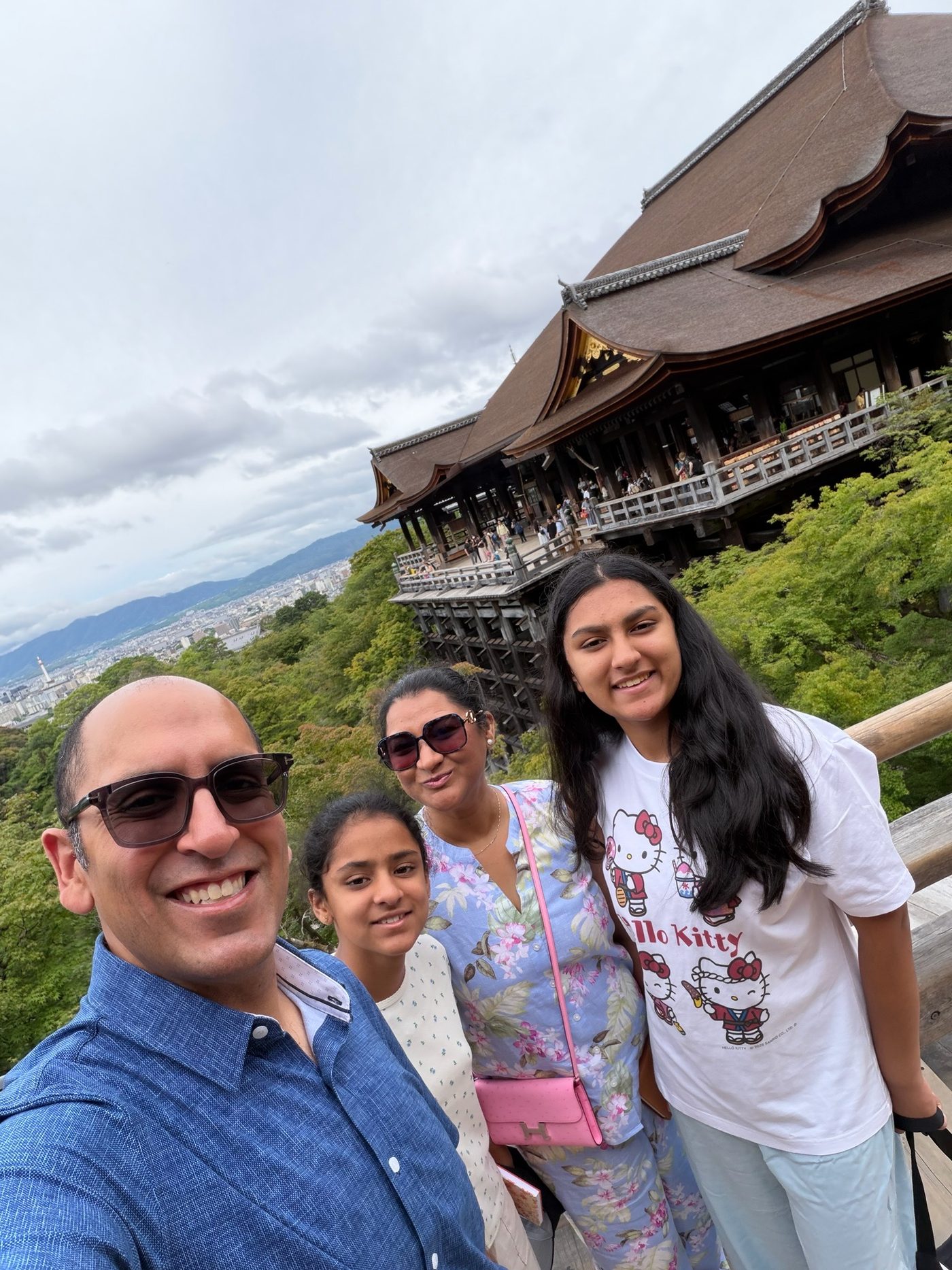
June is the rainy season, and it has a worse reputation than it deserves. It is rarely rain all day: more often grey mornings, passing showers and soft light, with hydrangeas along the temple paths and thinner crowds than in spring. Temperatures are warm rather than hot. For a family that does not mind an umbrella, it is one of the more comfortable summer months.
July splits in two. The first half is usually still the rainy season. Once it ends, in the second half of the month in an average year, the weather turns reliably sunny and genuinely hot, and the humidity stays. This is when the summer festivals and fireworks begin.
August is the height of the heat, and the middle of the month is Obon, when people across Japan travel home. Trains and hotels are at their busiest; in 2026 every seat on the Nozomi bullet trains was reserved-only during Obon. August and September are also when typhoons are most likely.
The rainy-season dates are averages from the Japan Meteorological Agency. The real start and end move by a week or more each year, so read them as a rough guide rather than a promise.
The shape of the day
How to plan a summer day around the heat
At a glance
Out early, in at midday, out again in the evening. Put the outdoor sights first thing, keep the hottest hours for indoor places or the mountains, and save markets and night walks for after dark.
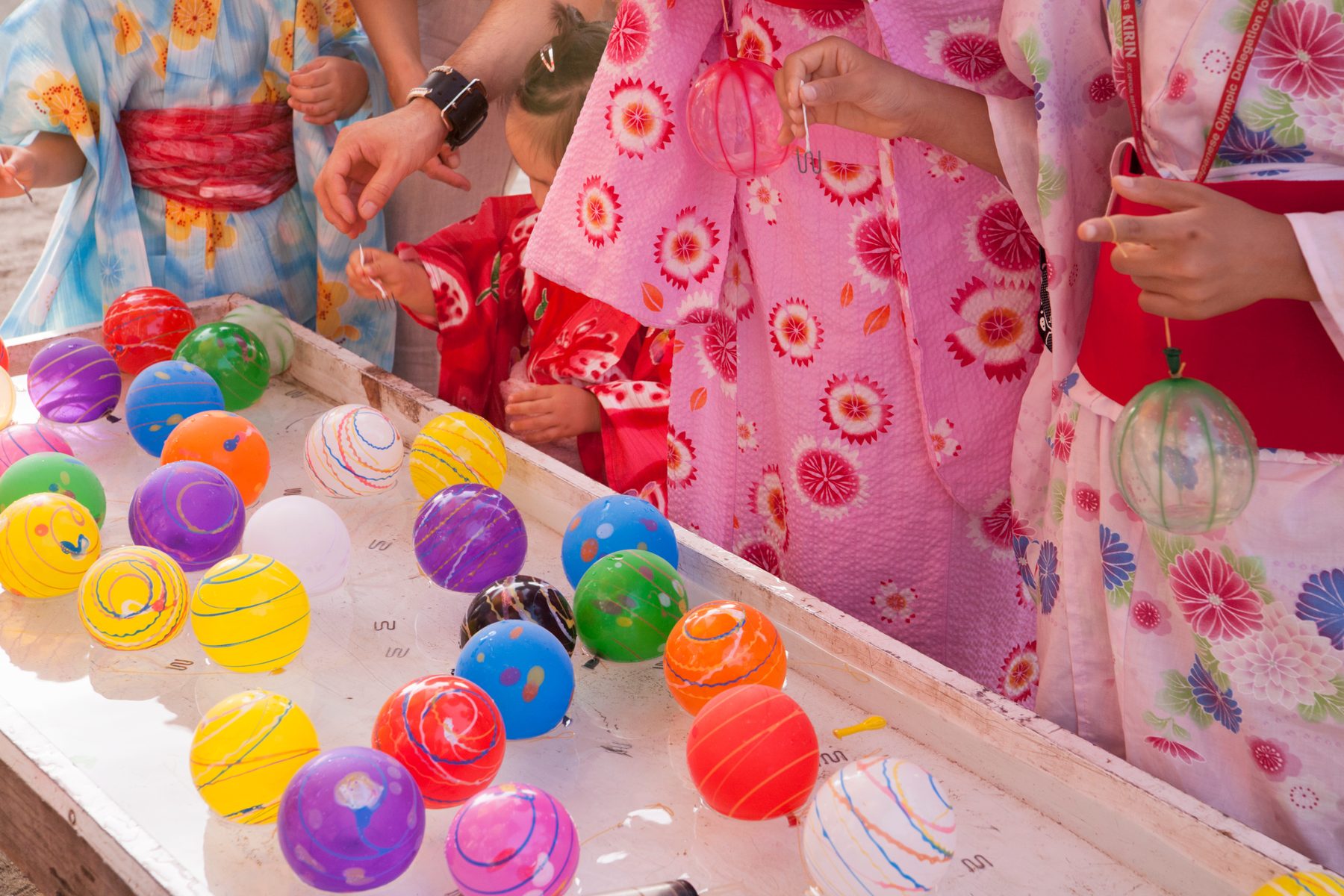
The single most useful change is to start early. Temples, gardens and famous viewpoints are cooler and quieter before nine; by late morning in July, the same places are hot and crowded. One family we planned for this summer saw the rock garden at Ryoan-ji at eight in the morning, before the heat and most of the visitors. Another started their Osaka day at the castle in the early morning, before the heat set in.
The middle of the day is for being inside or in the shade: museums, aquariums, department-store food halls, a long lunch, an hour back at the hotel. In Tokyo, immersive places like teamLab Planets work well, with an entry time that avoids the busiest part of the day. The evening then belongs to the city again: markets, lantern-lit streets, a night view.
Japan's Ministry of the Environment and Japan Meteorological Agency issue a heat stroke alert when the heat index (WBGT) is forecast to reach 33 or higher, from late April to late October. On alert days, plan the outdoor time early and keep the children drinking water. Vending machines and convenience stores are everywhere, which makes that easy.
Escapes
Where to cool off: mountains, rivers and water
At a glance
Go up. The mountain valleys north of Kyoto, Hakone and the Fuji lakes are noticeably cooler than the cities. In Kyoto, lunch on a platform over a mountain stream is the classic way to spend a hot day.
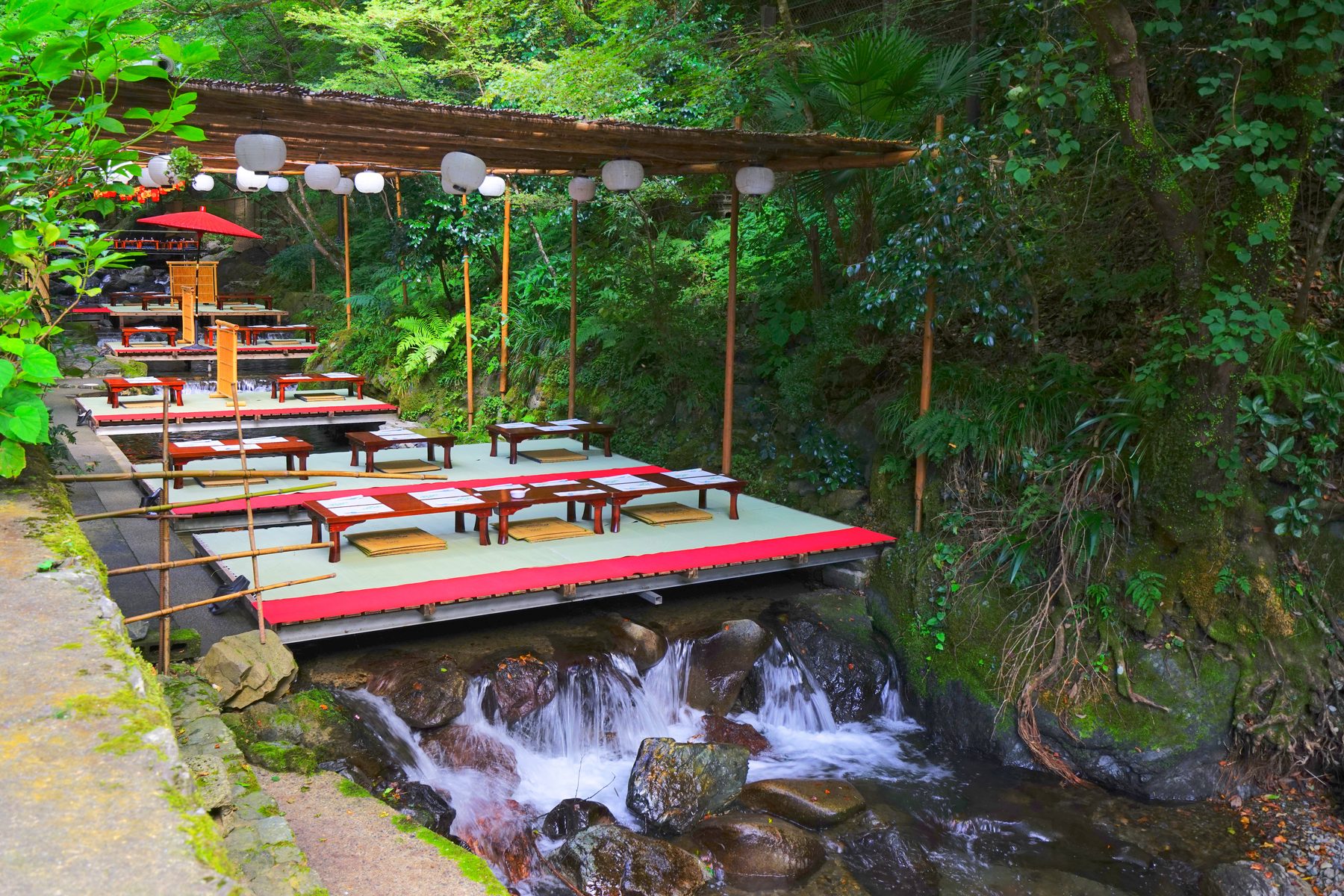
Kyoto sits in a basin, which is why it holds the summer heat so well, and why the hills around it feel so different. On the hottest day of their trip, with the forecast for central Kyoto close to 100°F, one family went north instead: the stone steps of Kurama-dera through cedar forest, then down into the valley of Kibune for lunch on a kawadoko, a wooden platform built over the stream, where the air is noticeably cooler than in the city.
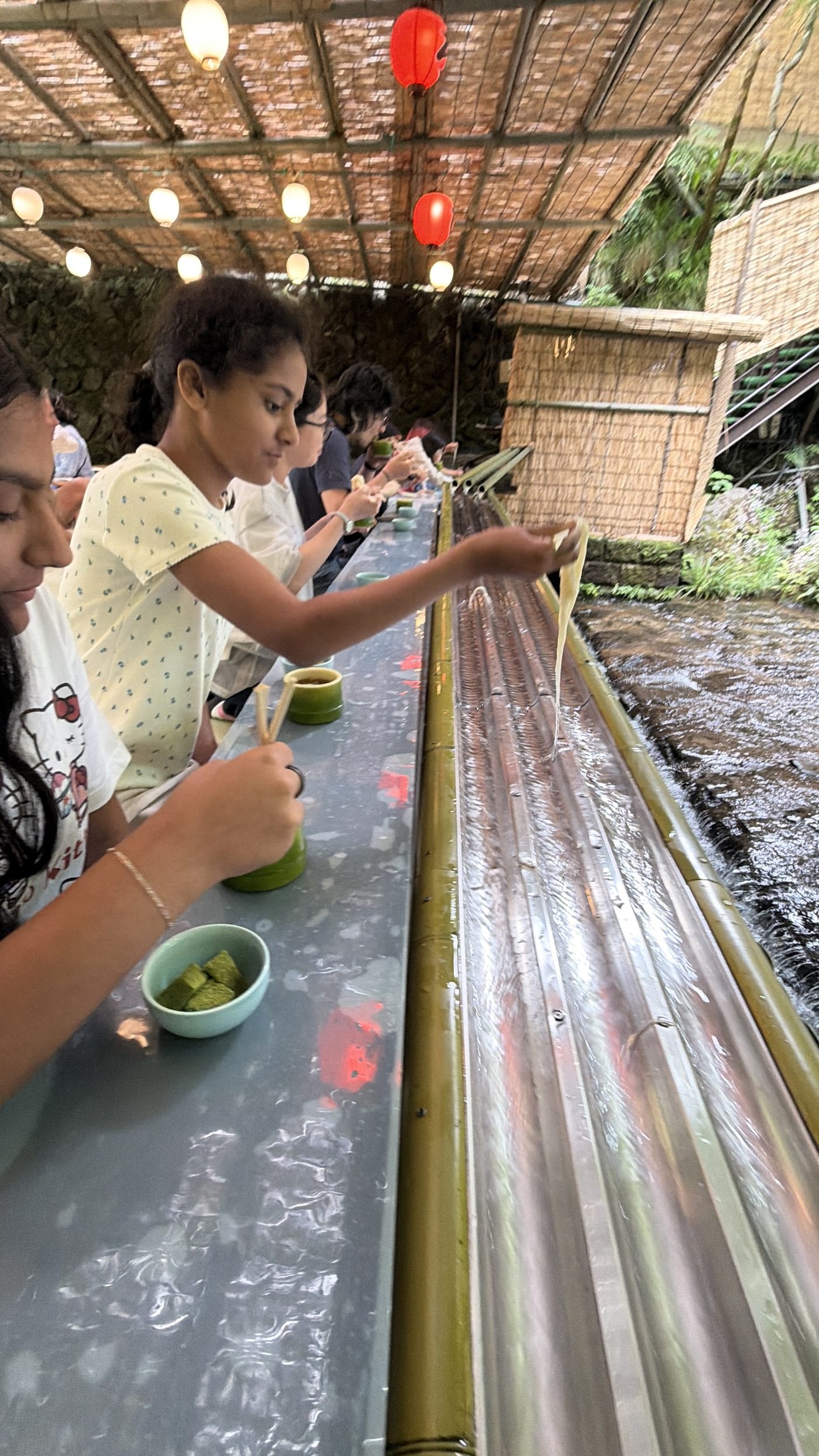
Another family, in June, spent part of a day at a riverside pavilion in the mountains where somen noodles are sent down a split-bamboo flume in cold water, and the only rule is to catch your lunch with chopsticks before it passes. It is the kind of summer experience children remember, and it happens in the cool.
Further east, Hakone and the lakes around Mt. Fuji are higher and fresher than Tokyo, and a ryokan with a hot-spring bath is, oddly, a pleasure even in summer.
Weather
Rain and typhoons: keeping the plan flexible
At a glance
Rain rarely ruins a day; it changes it. Typhoons are different: they can stop trains for a day. Keep one flexible day in the plan, and watch the official forecast the week before you go.
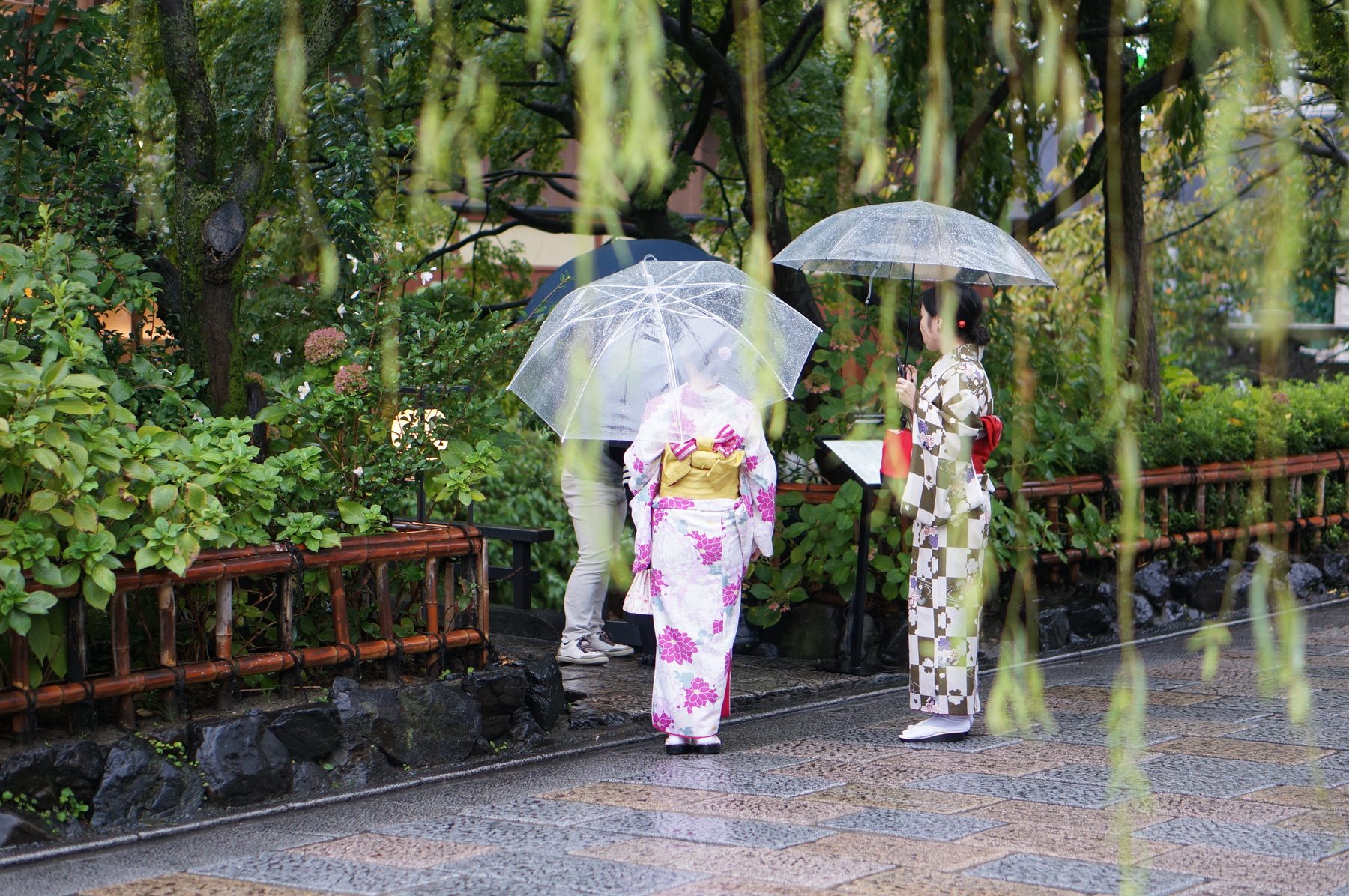
Most summer rain is showers. One family's day in Nara in June was steady rain from start to finish: clear umbrellas went up, the deer still bowed for crackers, and a girl with an umbrella beside a young deer became one of their favorite photographs of the trip. In July, another family's street photoshoot in Akihabara was interrupted by rain before it finished, and became something memorable instead.
Typhoons are the one summer weather event worth planning for. When one approaches, bullet trains and flights can be suspended for part of a day. The practical answer is a plan with some give in it: a day that can move, hotels that do not all depend on one train, and someone watching the forecast with you. It also helps to know what happens to the bullet train in a typhoon before you need to.
Real trips
How two families spent their summer days
At a glance
June: rain in Nara, noodles in the hills and the city in the early morning. Late July: early starts, a cool valley on the hottest day, and the heat planned around rather than endured.
June: ten days with two teenage daughters.This family's trip fell in the rainy season. They timed teamLab Planets away from the midday peak, spent part of a Kyoto day in the hills with nagashi somen, saw Nara in the rain, and began their Osaka day at the castle before the heat. Read their ten days.
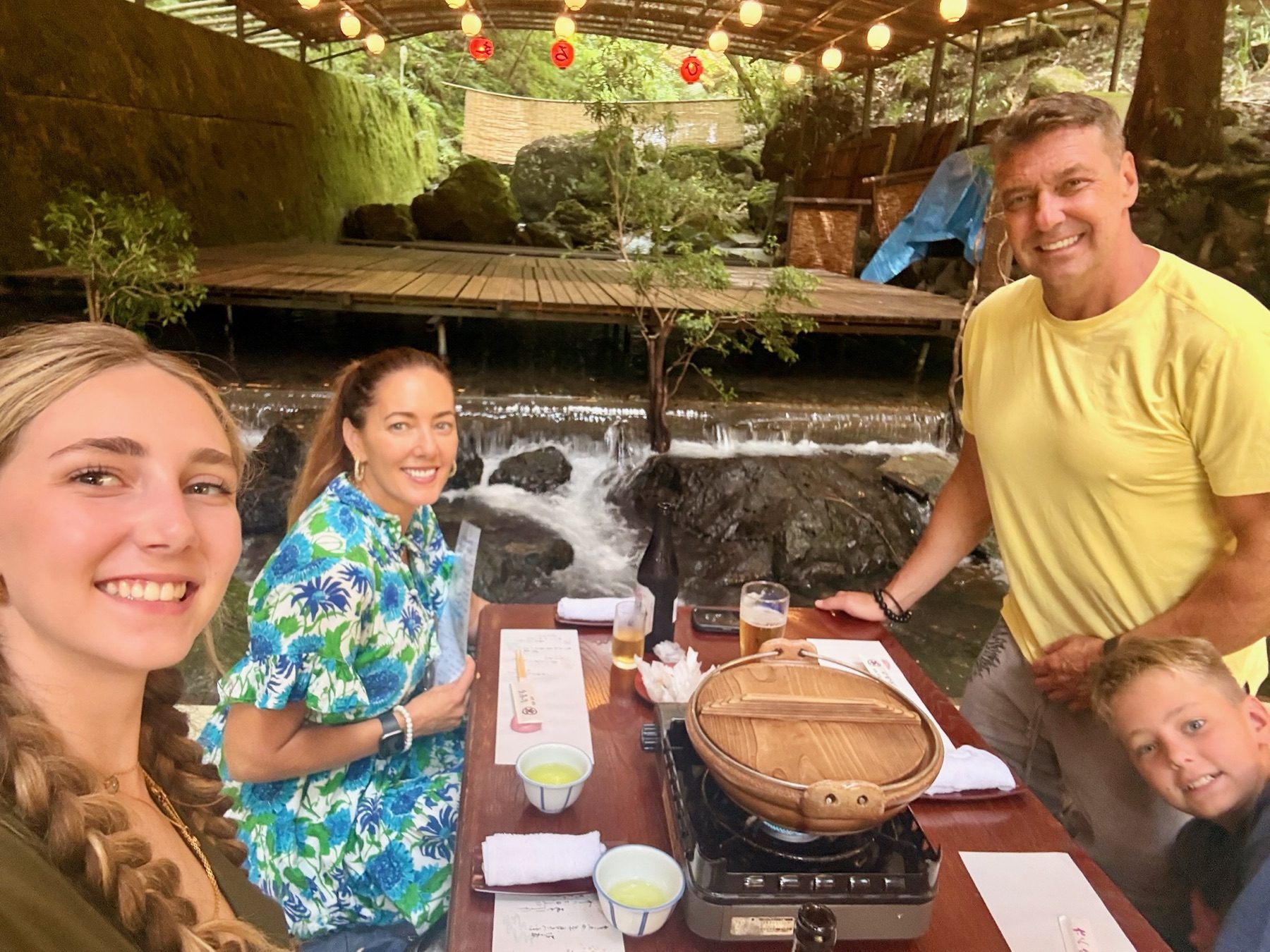
Late July: eleven days in the peak of the heat. A family of four with two children came in the hottest stretch of the year. Their days started early, with Ryoan-ji at eight; when the forecast for central Kyoto reached close to 100°F, the day went north into the mountains, to Kurama-dera and lunch over the stream in Kibune. In Nara they walked the deer park and the Great Buddha in temperatures close to 100°F, and the cool, dim hall of the Great Buddha was a welcome break.
Neither family stayed away from the heat. They put the right things at the right time of day, and kept the plan loose enough to move when the weather did.
A plan built around the heat, a cool day in the mountains, and a day that can move when a typhoon does. That is the part of a summer trip we usually take care of. Start a conversation →
The difference
All of it, or just part of it
The sights are the same in summer. What changes is the order of the day, the places that stay cool, and how much room the plan leaves for the weather.
We can plan the whole trip, or only the days that get complicated, and leave the rest to you.
Plan your summer in Japan →Questions, answered
Is Japan too hot in summer for kids?+
It is hot and humid in July and August, especially in Tokyo, Kyoto and Osaka, and the middle of the day can be hard on small children. It works well if you plan around it: early mornings outside, the hottest hours indoors or in the mountains, and evenings out again. Japan's heat stroke alert is issued when the heat index reaches a level that calls for real care, and it is worth checking on the day.
When is the rainy season in Japan?+
In an average year it runs from early June to mid-July in Tokyo and in the Kyoto, Osaka and Nara area, according to the Japan Meteorological Agency. The actual dates move every year. It is rarely rain all day, every day: more often a mix of grey days and showers, with hydrangeas in the temple gardens.
Is August typhoon season in Japan?+
Typhoons approach Japan most often in August and September. Most trips are not affected, but a typhoon can stop trains and flights for a day, so it is worth keeping one flexible day in the plan and watching the official forecast in the week before you travel.
What is the best month for a summer trip to Japan with children?+
Late July, after the rainy season usually ends, has the most reliable weather but also the most heat. June is cooler and greener, with some rain. Mid-August brings the Obon holidays, when trains and hotels are busiest. School holidays decide the dates for most families, so the useful question is how to shape each day rather than which week to choose.
Where can you escape the heat in summer in Japan?+
Into the mountains and onto the water. From Kyoto, the valley of Kibune to the north is noticeably cooler, with restaurants built on platforms over the stream. Hakone and the Fuji Five Lakes area are cooler than Tokyo. In the cities, museums, aquariums and indoor attractions make the middle of the day easy.
How hot does it get in Tokyo and Kyoto in August?+
In an average August the daily high is about 31°C (88°F) in Tokyo and about 34°C (93°F) in Kyoto, according to the Japan Meteorological Agency's 30-year averages. Humidity is high, and some days run well above the average: one family we planned for this July saw a forecast close to 100°F in central Kyoto. Up at Lake Kawaguchi, at the foot of Mt. Fuji, the average August high is about 28°C (83°F).
When is Japan's heat stroke alert issued, and what should families do?+
It is issued when the heat index (WBGT) is forecast to reach 33 or higher, from late April to late October, region by region, and announced at 5 p.m. the day before and again at 5 a.m. on the day. On alert days, Japan's Ministry of the Environment advises avoiding going out as much as possible and keeping rooms cool with air conditioning, and notes that children are among those more susceptible to heat illness. The alert map is published in English on the Ministry's heat illness site.
Do you need to book bullet train seats in advance in summer?+
During Obon, yes. In 2026 every Nozomi between Tokyo and Hakata was reserved-only from 7 to 16 August; without a seat reservation you could only stand in the area between cars, and might not get on at all. At stations, reserved seats go on sale one month before the travel date, at 10 a.m.. A child under six who takes a seat of their own needs a child fare, according to JR Central.
What number do you call for an ambulance in Japan?+
119, the same number as for fire, according to the Japan National Tourism Organization. If you cannot make the call yourself, ask someone nearby to call an ambulance for you. For help in English that is not an emergency, JNTO's Japan Visitor Hotline is on 050-3816-2787, 24 hours a day, 365 days a year, in English, Chinese and Korean, and can point you to clinics that see patients in foreign languages.
Is there an app that sends weather warnings in English in Japan?+
Yes. Safety Tips, from the Japan Tourism Agency, pushes earthquake early warnings, tsunami warnings and other weather warnings to your phone in 15 languages, including English. It is worth installing before a summer trip. For where a typhoon is heading, the Japan Meteorological Agency typhoon map is the source to watch.
Continue exploring
Japan changes its prices and its rules more often than most countries, and a good deal of what is written about it online is quietly out of date. The fares, fees, taxes and access rules on this page were checked against the official sources below in October 2026. Where something was likely to move, we have said so in the text. If you are traveling on dates far from that, check the official page — or ask us — rather than trusting any guide, including this one.
Checked against
- Japan Meteorological Agency — rainy season onset and end, Kanto-Koshin (Japanese)
- Japan Meteorological Agency — rainy season onset and end, Kinki (Japanese)
- Japan Meteorological Agency — typhoon statistics, 30-year averages (Japanese)
Show all sources ▾Show fewer ▴
- JR Central — Nozomi all-reserved periods
- Ministry of the Environment — Heat Stroke Alert (with the Japan Meteorological Agency)
- Japan Meteorological Agency — climate normals for Tokyo, 1991–2020 (Japanese)
- Japan Meteorological Agency — climate normals for Kyoto, 1991–2020 (Japanese)
- Japan Meteorological Agency — climate normals for Kawaguchiko, 1991–2020 (Japanese)
- Japan National Tourism Organization — guide for when you feel ill
- Japan Tourism Agency — Safety Tips app for visitors
- Japan Meteorological Agency — typhoon information map (English)