
Travel Guide · Day Trips
Kyoto to Nara: A Day Trip That Fits Your Itinerary
Which train to take, how long to stay, and three ways real families fitted Nara in.
Late in May, with a typhoon heading toward western Japan, one of the families we were looking after in Kyoto changed the plan for the day and took the train to Nara instead. That evening the mother sent us her verdict:
“Nara was a good call”
Nara is the day trip almost every Kyoto itinerary has room for, and the one families mention most often afterward. It is close, it is calm after Kyoto, and its great sights, the deer park, the Great Buddha and the lantern paths of Kasuga Taisha, sit within walking distance of each other. This guide covers which train to take, a half-day route, whether the sunset on Mt. Wakakusa works for your dates, and how three families we planned for this year actually fitted Nara into their trips.
At a glance
Take Kintetsu from Kyoto Station: about 35 minutes by limited express, and Kintetsu-Nara Station is a five-minute walk from the park. Half a day covers the deer, the Great Buddha at Todai-ji and Kasuga Taisha. Go in the morning, before the tour groups. And if you are moving on to Osaka, do Nara on the way rather than as a round trip.
The case
Is Nara worth a day trip from Kyoto?
At a glance
Yes.It was Japan's capital before Kyoto, its temples are older and larger, and the whole visit happens on foot in one park. It works as a half day, and it is one of the easiest days of a trip to plan.
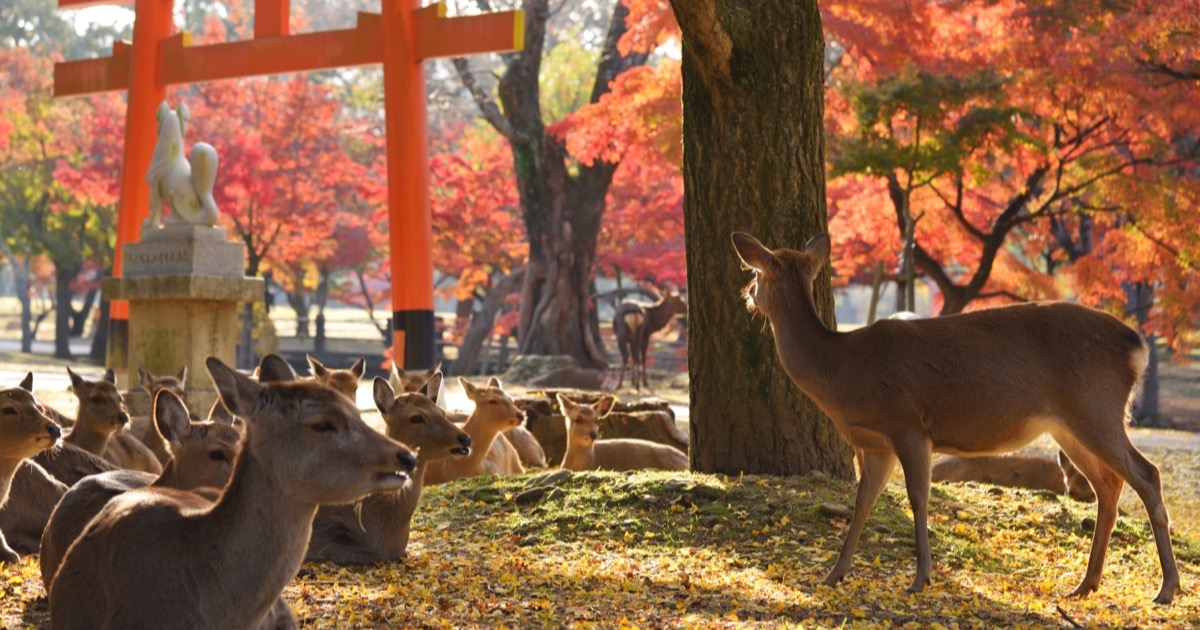
Where Kyoto is a city of many small temples spread across hillsides, Nara is a few very large ones gathered in one green park, with the deer wandering between them. The scale is different: the Great Buddha Hall of Todai-ji is one of the largest wooden buildings in the world, and the walk to Kasuga Taisha runs through forest lined with stone lanterns.
For a family it is also simply easy. There is one station to arrive at, one park to walk, no buses to work out and no early booking to make. That is why it so often becomes the flexible day of a Kyoto stay: the day you can move when the weather turns, or keep loose when everyone is tired.
Getting there
Kintetsu or JR: which train to take
At a glance
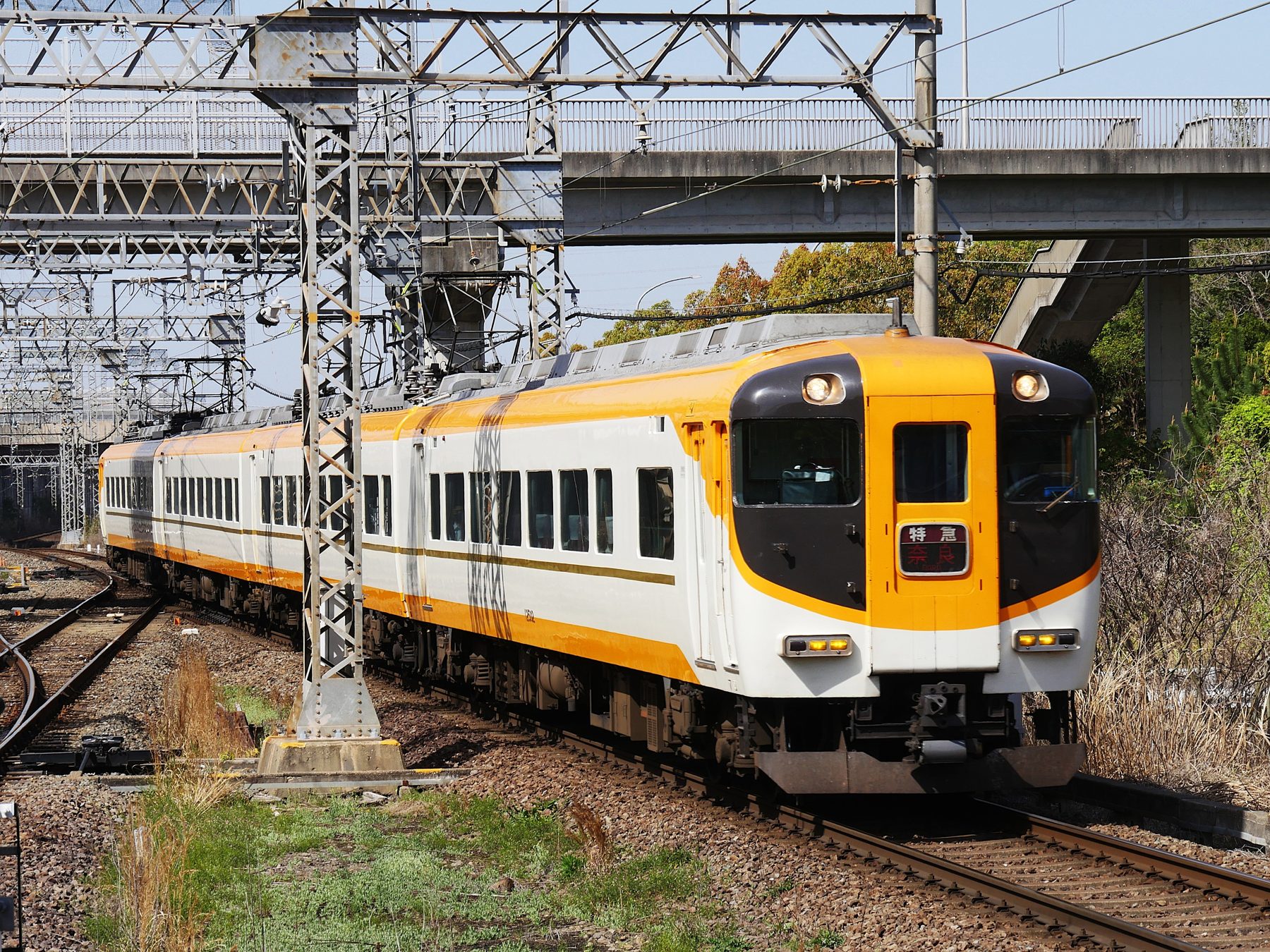
Kintetsu from Kyoto Station to Kintetsu-Nara: about 35 minutes by limited express (extra charge), and five minutes on foot to the park. JR Miyakoji Rapid to JR Nara: about 45 minutes, then about twenty minutes on foot.
| From Kyoto Station | Time | Arrives at |
|---|---|---|
| Kintetsu limited express | About 35 minutes (reserved seats, extra charge) | Kintetsu-Nara, 5 minutes on foot to Nara Park |
| JR Miyakoji Rapid | About 45 minutes | JR Nara, about 20 minutes on foot to Nara Park |
For most travelers Kintetsu is the better choice, because of where it arrives. Kintetsu-Nara Station is on the edge of the park, so you come up the stairs and the deer are already there. JR Nara Station is further out, which matters more on the walk back, with tired legs, than it does in the morning.
The JR line has one advantage: it passes Inari Station, the stop for Fushimi Inari, on the way south. If you want the vermilion gates and Nara in the same day, that is the line that strings them together.
Travel times are from the Nara City Tourism Association. Kintetsu limited express seats are reserved, so on a busy day it is worth buying the seat when you arrive at the station rather than at the last minute.
The day
A half-day route through Nara
At a glance
Kintetsu-Nara → the deer park → Todai-ji and the Great Buddha → the lantern path to Kasuga Taisha → back. Three to four hours at an easy pace. Start in the morning.
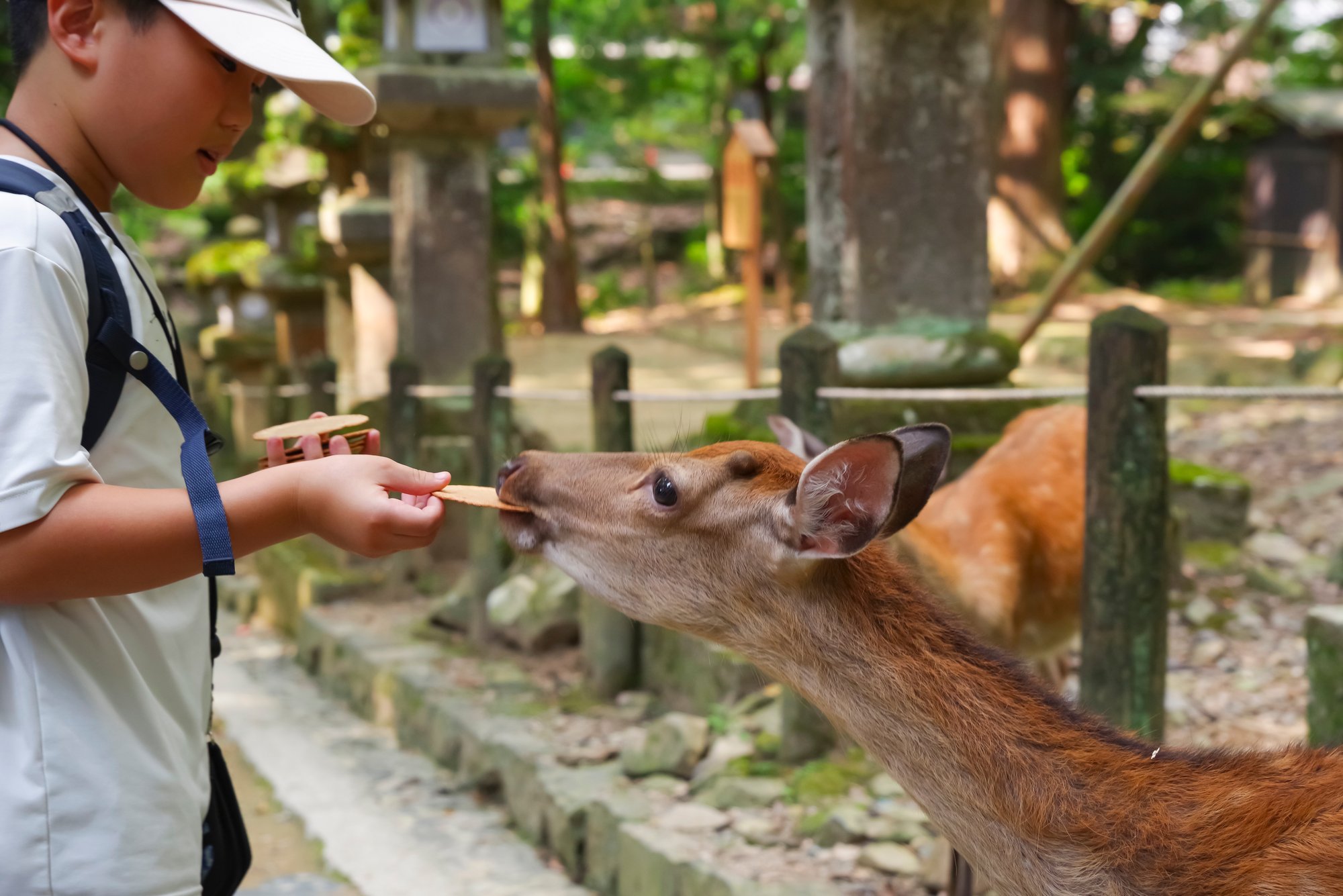
The deer park. From Kintetsu-Nara you walk straight into Nara Park, and within minutes you will meet the deer. Vendors around the park sell deer crackers, and the deer have learned to bow for them. Children will want to buy more than one bundle; it is worth planning on that.
Todai-ji and the Great Buddha. The bronze Buddha sits inside the Great Buddha Hall, and the first sight of it through the doors is the moment people remember. Admission to the hall is ¥800 for adults and ¥400 for children aged 6 to 12, and it is open 7:30 a.m. to 5:30 p.m. from April to October, and 8:00 a.m. to 5:00 p.m. from November to March. On a hot day, the hall is also one of the coolest places in the park.
Kasuga Taisha. From Todai-ji, the forest path toward Kasuga Taisha is lined with moss-covered stone lanterns, and it is the quietest part of the visit. Walk as far as the shrine, or turn back halfway if the children are flagging. Either way it is a gentler end to the morning than another temple.
Back in the town, the old streets of Naramachi, south of the park, are good for lunch and a slower hour if you have a full day.
An honest note
Can you see Mt. Wakakusa at sunset?
At a glance
Only in late autumn. The hillside is open from the third Saturday of March to the second Sunday of December, and the gates are open 9:00 a.m. to 5:00 p.m.. For most of the season the sun sets after the gates close.
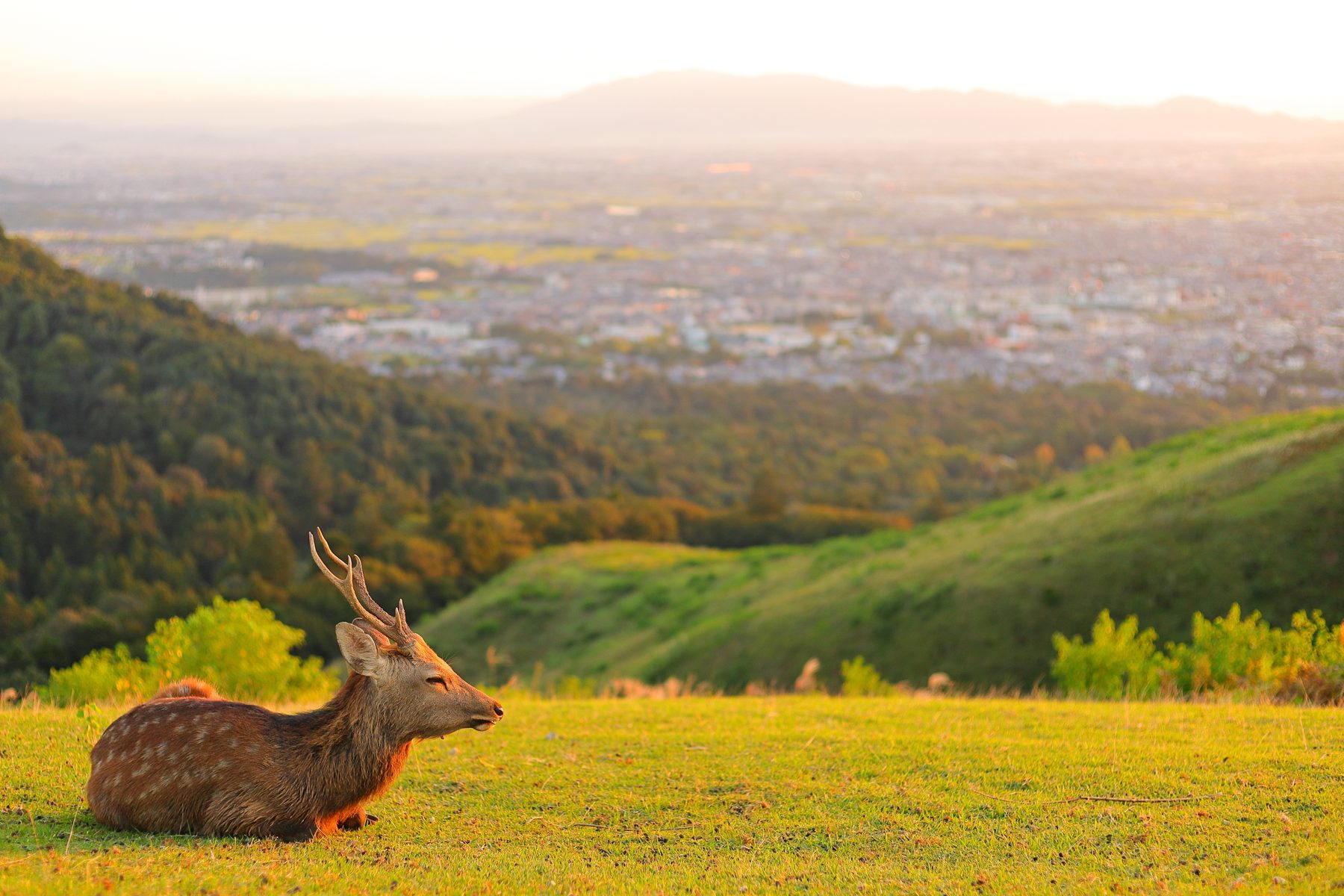
Mt. Wakakusa is the grassy hill at the eastern edge of the park, and the view over the city from the slope is lovely in the late afternoon. It is often suggested as a way to end a Nara day at sunset. The catch is the opening hours: the slope closes at five, and from spring through early autumn the sun goes down well after that.
In late autumn, when the days are short, the timing can line up. Outside that window, plan the climb for the afternoon light rather than the sunset itself, and check the sunset time for your date before you build the day around it.
Real trips
How three families fitted Nara in
At a glance
A half day from Kyoto when a typhoon changed the plan. On the way to Osaka, after Fushimi Inari, in the rain. And on the way to Osaka again in summer heat, on foot without a guide. Three different days, all built around the same park.
Late May: the flexible day. A family of four from Las Vegas was in Kyoto when a typhoon started tracking toward western Japan. Rather than push on with the original plan, their guide took them by direct train to Nara for three unhurried hours among the temple paths, ending at Todai-ji. They were back in Kyoto that evening for a private dinner with a maiko. Read their seven days.
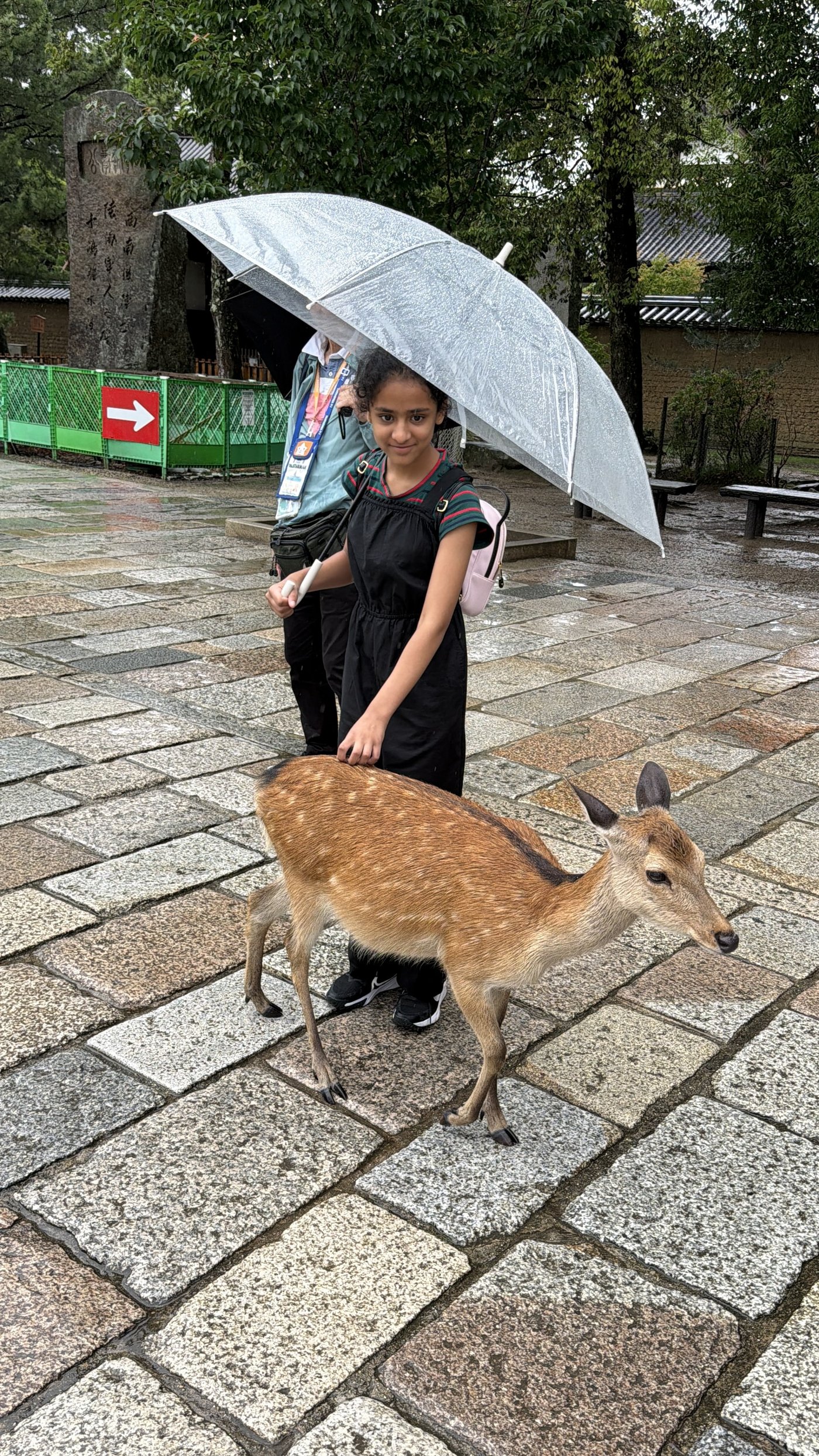
Mid-June: Nara on the way to Osaka.Another family of four saw Fushimi Inari's gates early in the morning on the way out of Kyoto, then spent the day in Nara in steady rain. Clear umbrellas went up, the deer still bowed for crackers, and the wet stone lanes around Todai-ji and Kasuga Taisha had a shine that dry days do not. In the evening a private car took them on to Osaka; their bags had gone ahead by same-day delivery that morning. Read their ten days.
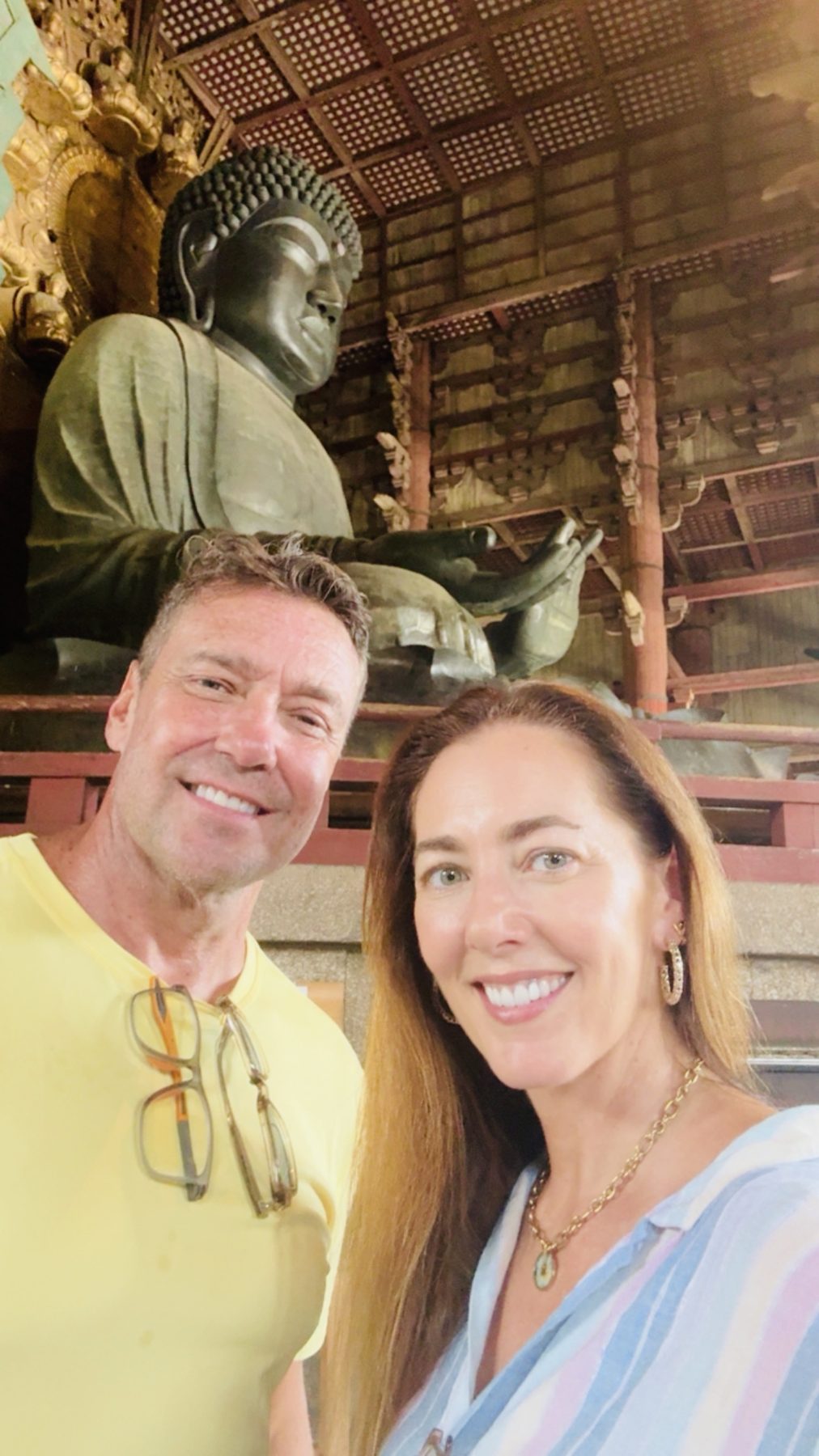
Late July: on foot, in the heat. A third family did the same move from Kyoto to Osaka in midsummer. They kept Fushimi Inari short, then explored Nara on their own: their driver dropped them near the park entrance, and they walked the deer park, the Great Buddha and the lantern path to Kasuga Taisha in temperatures close to 100°F. The Great Buddha Hall, cool, dim and quiet, was a welcome break in the middle of it.
The pattern across all three is the useful part. Nara fits best as either the loose day of a Kyoto stay or the stop between Kyoto and Osaka, and in both cases the logistics around it, the luggage and the onward move, matter more than the sightseeing itself.
Moving hotels, a car for the day, bags sent ahead, and a plan that can bend when the weather does. That is the part of a Nara day we usually take care of. Start a conversation →
With children
Nara with children
At a glance
The deer are the highlight and the one thing to manage. Hand crackers over quickly, hold small hands near big groups of deer, and give stags room, especially in autumn.
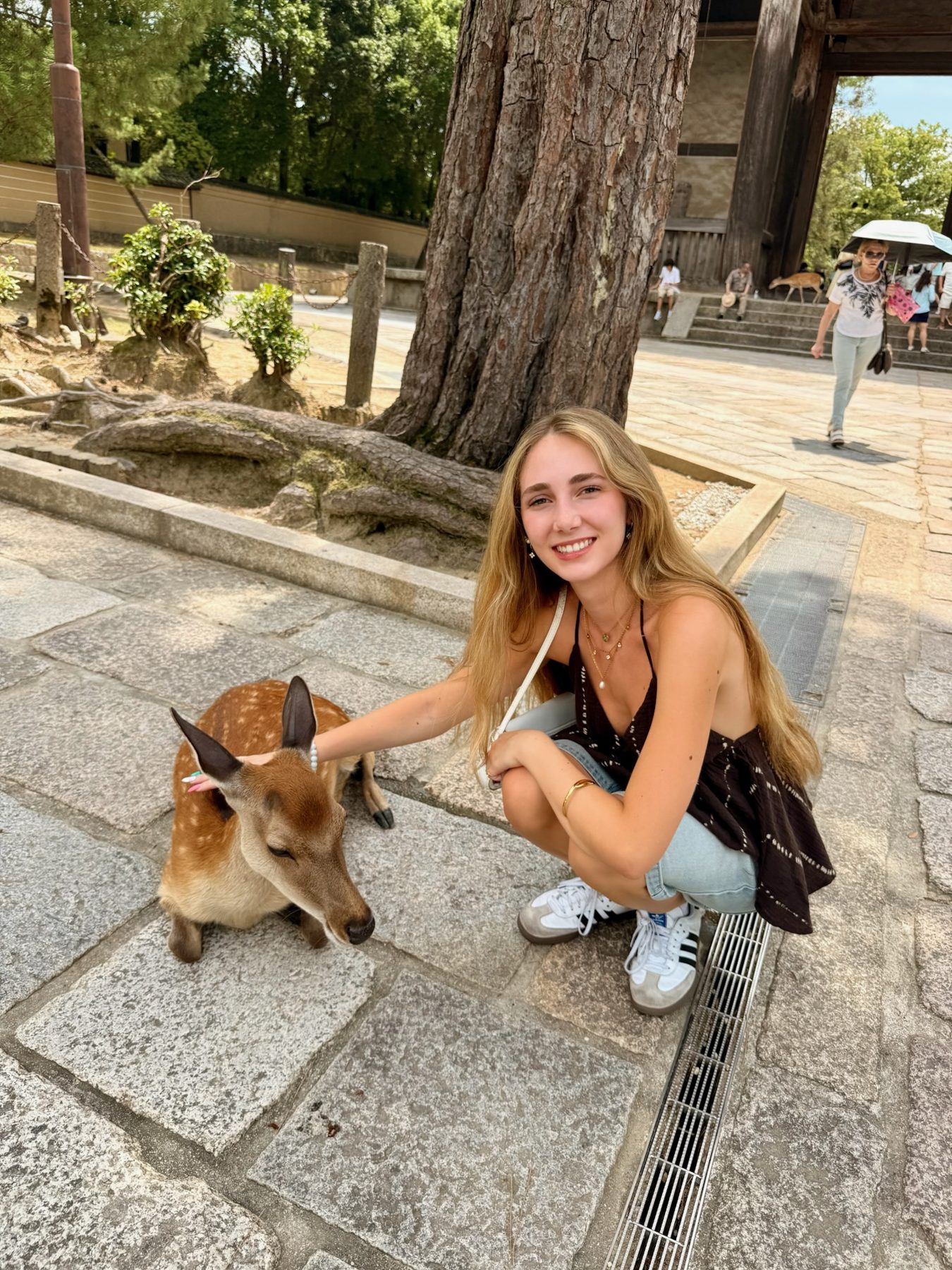
Nara's deer are wild animals that have grown used to people. Most encounters are gentle, and the bowing is real. But a deer that knows you have crackers will follow, nudge and sometimes nip, and a group of them around a small child can be a lot. The simplest rule is to hand the crackers over quickly and show empty palms when you are done.
Beyond the deer, Nara is one of the easiest days of a family trip: mostly gentle paths, one park, and no bookings to make in advance. With younger children, the half-day route above is enough; with teenagers, add Mt. Wakakusa or a long lunch in Naramachi.
The difference
All of it, or just part of it
Nara on its own is easy. What takes planning is the day around it: whether it should be the loose day in Kyoto or the stop on the way to Osaka, how the luggage moves, and what changes when the forecast does.
We can plan the whole trip, or only the days that get complicated, and leave the rest to you.
Plan your Kyoto and Nara days →Questions, answered
Is Nara worth a day trip from Kyoto?+
Yes. It is close, it is very different from Kyoto in feel, and the main sights sit within walking distance of each other in and around Nara Park. All three families we planned Kyoto trips for this year went, for three or four hours each, and one mother summed it up in a message that evening: Nara was a good call.
How long does it take to get from Kyoto to Nara?+
About 35 minutes on the Kintetsu limited express, which needs an extra limited express charge, or about 45 minutes on the JR Miyakoji Rapid, according to the Nara City Tourism Association. Kintetsu-Nara Station is a five-minute walk from Nara Park; JR Nara Station is about twenty minutes away on foot.
How much time do you need in Nara?+
Half a day covers the deer park, the Great Buddha at Todai-ji and the lantern-lined approach to Kasuga Taisha at an easy pace. A full day lets you add Mt. Wakakusa, the old Naramachi streets or a long lunch without rushing.
Can you see Mt. Wakakusa at sunset?+
Only at certain times of year. The hillside is open from the third Saturday of March to the second Sunday of December, and the gates close at 5 p.m. For most of that season the sun sets after closing, so a sunset from the slope lines up only in late autumn, when the days are short. Check the sunset time for your date before you plan around it.
Can you do Nara on the way from Kyoto to Osaka?+
Yes, and it is often the best way to fit it in. Go to Nara in the morning or early afternoon, then continue to Osaka in the evening. Sending your bags ahead between hotels, or traveling by car, keeps you from carrying luggage around the park.
Are the deer in Nara safe for children?+
They are wild animals that have grown used to people, and most encounters are gentle: they bow for deer crackers and follow anyone holding them. They can also nudge, nip and butt when they want food, so hand the crackers over quickly, hold small children's hands near large groups of deer, and give stags extra room, especially in autumn.
Can you use the Japan Rail Pass from Kyoto to Nara?+
Yes, on the JR route. The JR Miyakoji Rapid from JR Kyoto to JR Nara takes about 45 minutes and is a JR train, so the pass covers it. The faster Kintetsu limited express runs on a private railway, and the Japan Rail Pass rules say private railway sections are paid separately. With a pass, JR saves the fare; Kintetsu saves about ten minutes on the train and a twenty-minute walk to the park.
What are the opening hours and admission for Todai-ji?+
The Great Buddha Hall at Todai-ji is open 7:30 a.m. to 5:30 p.m. from April to October, and 8:00 a.m. to 5:00 p.m. from November to March. Admission is ¥800 for adults and ¥400 for children aged 6 to 12, according to Todai-ji. Hours and fees can change, so check the temple's own page before you go.
What can you feed the deer in Nara?+
Only the deer crackers, shika senbei, sold around the park. Nara Prefecture bans feeding the deer anything else, because other food such as snacks, bread or vegetables can make them ill. The crackers are the exception because they are made to be safe for deer, and part of the sales goes to protecting them.
Are there trash bins in Nara Park?+
No. Nara Prefecture asks visitors to take their rubbish home with them. Bring a small bag for wrappers, and keep paper, plastic and shopping bags out of the deer's reach, since they will try to eat them.
What is the best time of day to visit Nara?+
Early in the morning. You see the deer park, Todai-ji and Kasuga Taisha before most tour groups arrive, and on summer days you finish the walking before the worst of the heat. Todai-ji's Great Buddha Hall opens early, so a morning start does not mean waiting at closed gates.
Continue exploring
Japan changes its prices and its rules more often than most countries, and a good deal of what is written about it online is quietly out of date. The fares, fees, taxes and access rules on this page were checked against the official sources below in October 2026. Where something was likely to move, we have said so in the text. If you are traveling on dates far from that, check the official page — or ask us — rather than trusting any guide, including this one.
Checked against