
Travel Guide · Kyoto
Arashiyama Beyond the Bamboo Grove
When to walk the grove, what to see after it, and how three real families spent their day.
A week before their Arashiyama morning, a mother traveling with her family this June looked at the plan, a Zen garden first and the bamboo grove after, and sent us one question:
“Will Arashiyama get too crowded to see after the Zen garden?”
It is the right question, and the one almost everyone asks about Arashiyama. The bamboo grove is the photo people come for, and by mid-morning it is one of the most crowded paths in Kyoto. But the grove is only a few minutes of the day. Around it are a great Zen garden, a river with boats on it, and to the north a string of small, quiet temples that most visitors never reach. This guide covers when to walk the grove, what to see after it, a half-day route, and how three families we planned for this year spent their Arashiyama day.
At a glance
Walk the bamboo grove before 8 a.m. Then go next door to Tenryu-ji's garden when it opens, and head north into Sagano for the quieter temples: Adashino Nenbutsu-ji has its own bamboo path, and Otagi Nenbutsu-ji is closed two days a week, so check before you go. Half a day is enough; add the scenic train and the river for a full one.
Timing
How to see the bamboo grove without the crowds
At a glance
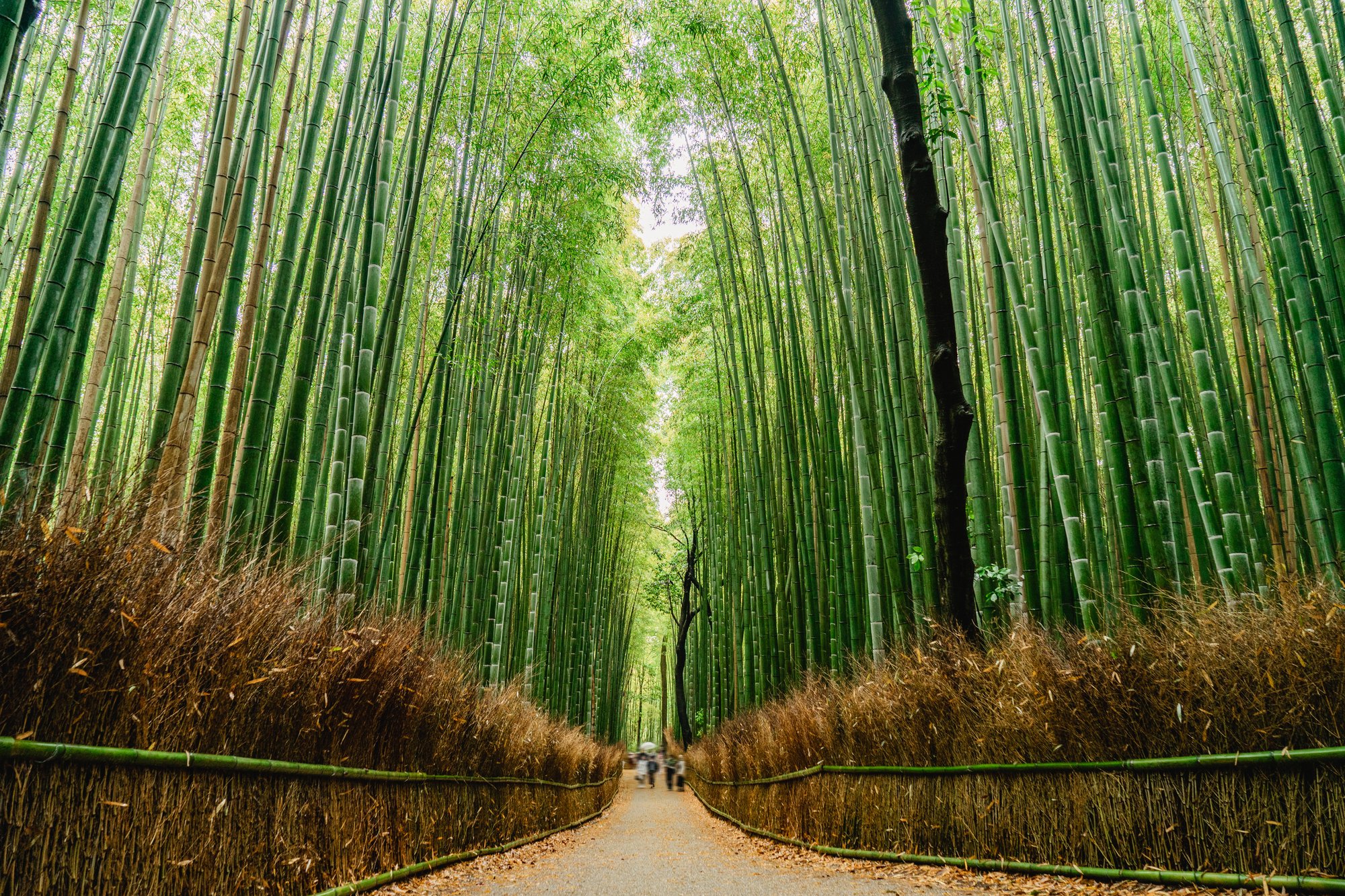
Go before 8 a.m. The path is short and flat, so an early visit costs you little, and it is the difference between walking through the grove and queueing through it.
The grove is a walking path between tall stands of bamboo, running from the area behind Tenryu-ji toward the hills. Walking it takes minutes, not hours. What decides whether it is beautiful or frustrating is almost entirely the time you arrive. Early in the morning you hear the stems creak in the wind; by late morning the same path is a slow line of people holding up phones.
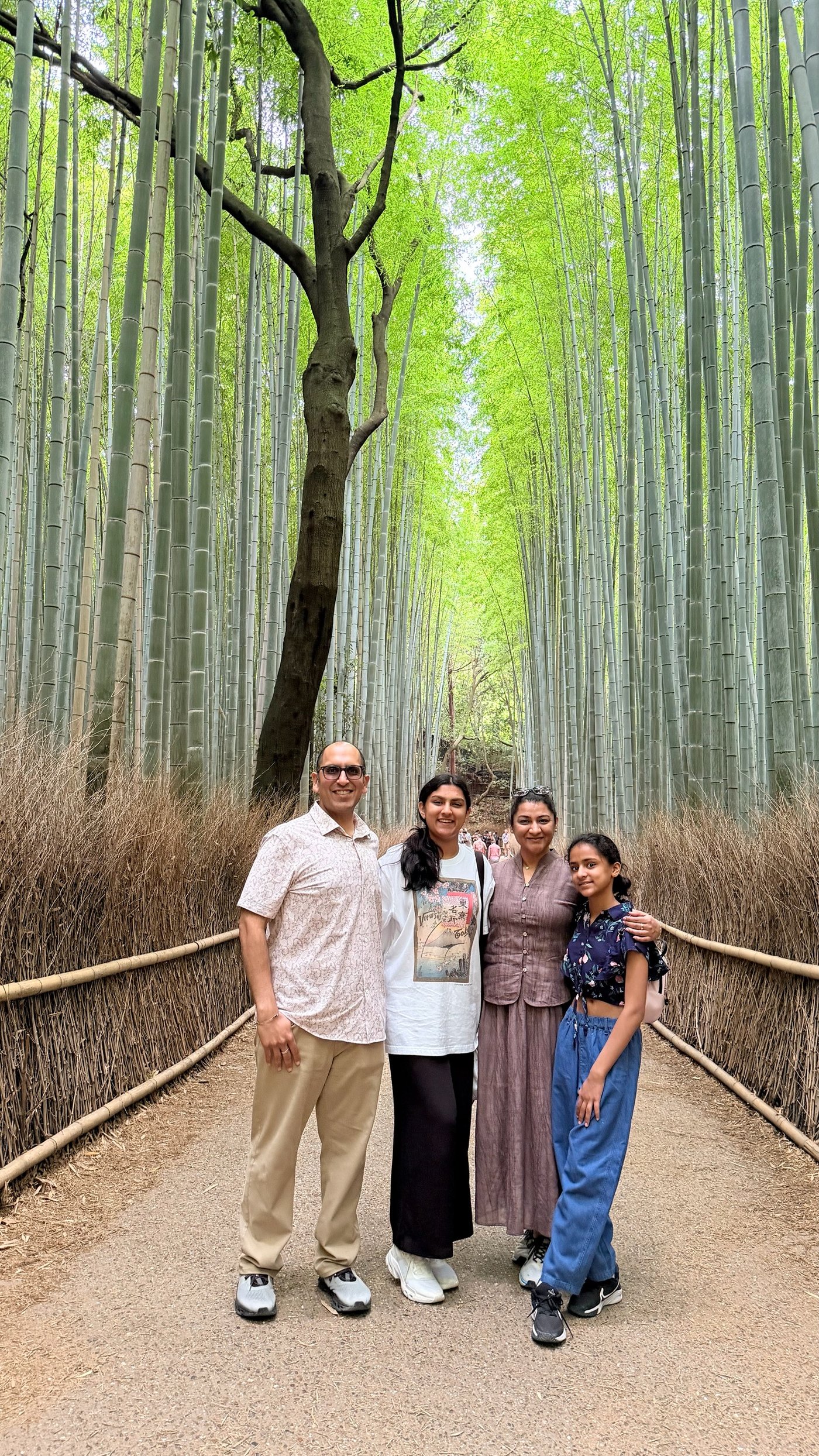
For the family whose question opens this guide, the plan had them at the rock garden of Ryoan-ji just before eight, leaving by half past and reaching the grove before nine. We told them that should still mean lighter crowds, and that the order could be decided on the morning itself with their driver. In the end they were picked up at seven and went to the bamboo first, while the path was still empty, and saw Ryoan-ji afterward.
If the morning has to start somewhere else, keep the grove as early as you can and put the places with opening hours, like Tenryu-ji or the temples to the north, after it. The grove is the one stop here that gets steadily worse as the day goes on.
Next door
Tenryu-ji: the garden beside the grove
At a glance
The garden at Tenryu-ji sits at the bamboo grove's southern end. It is open 8:30 a.m. to 5:00 p.m., with last entry at 4:50 p.m., and admission to the garden is ¥500 for high school students and adults and ¥300 for elementary and junior high school students.
Tenryu-ji is one of Kyoto's great Zen temples, and its garden, a pond set against the wooded hills behind it, is the calm counterpart to the grove. The two connect: you can walk from the garden toward the bamboo, which makes Tenryu-ji the natural second stop of the morning. The garden opens after the grove's quietest hour has passed, so the order usually decides itself: bamboo first, garden at opening time.
The temple buildings charge a little more on top of the garden ticket. The temple also closes on some dates for its own events, so it is worth checking its website for your day.
Beyond the grove
The quieter temples of northern Sagano
At a glance
North of the grove, the road climbs gently through Sagano past Gio-ji, a tiny moss garden temple, Adashino Nenbutsu-ji, with a bamboo path of its own, and the old houses of Saga-Toriimoto, to Otagi Nenbutsu-ji at the top. Otagi is closed on Wednesdays and Saturdays.
This is the part of Arashiyama that the bamboo photo leaves out. The mother whose question opens this guide had drawn up her own list for the day, and the bamboo grove was only the first line of it. The rest read like a walk north: Tenryu-ji's garden, Otagi Nenbutsu-ji, the historic street of Saga-Toriimoto, Adashino Nenbutsu-ji, and Gio-ji. It is a very good list.
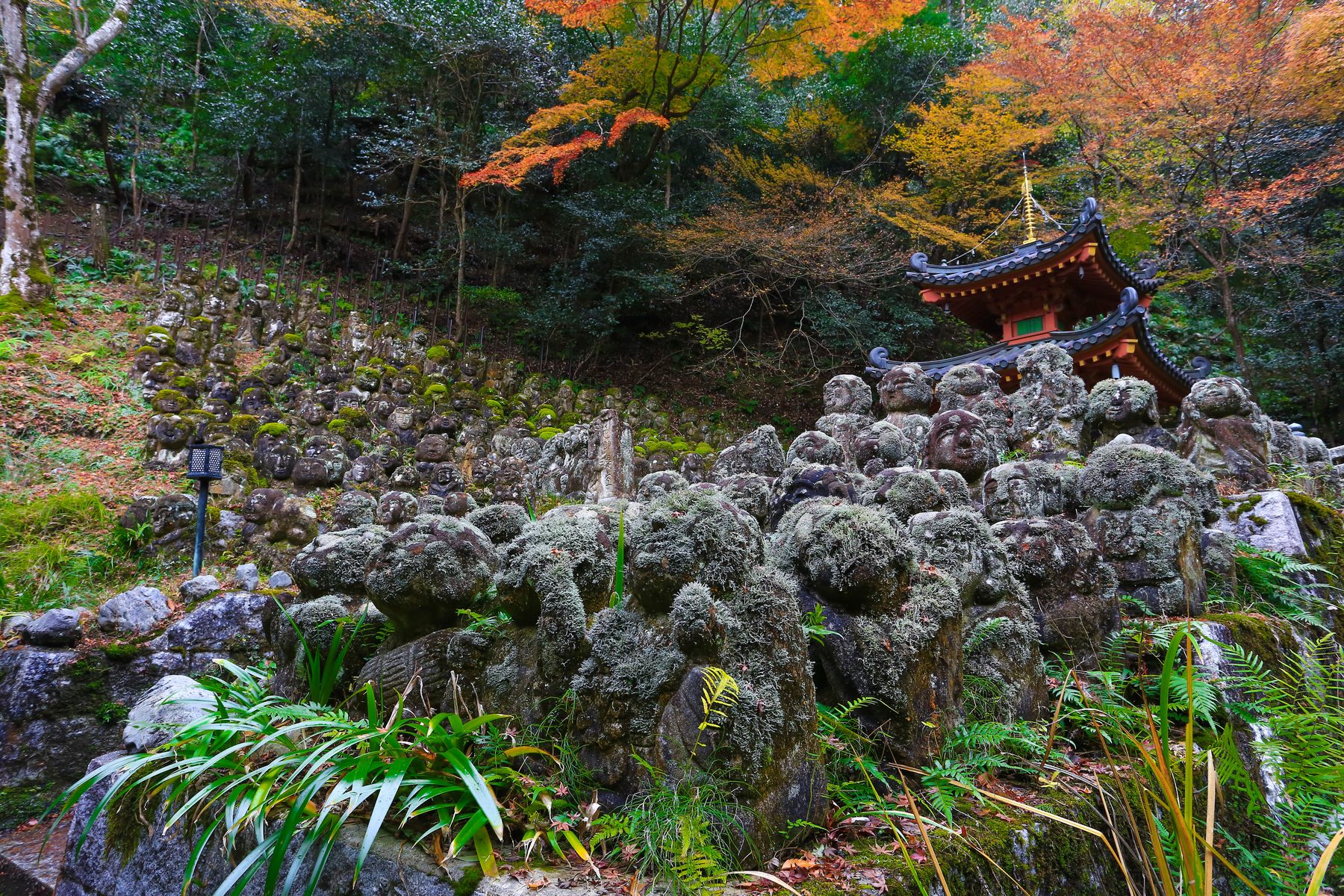
Gio-ji is a small temple whose garden is a carpet of moss under maple trees, lovely in green summer and in autumn color. Adashino Nenbutsu-ji is known for the thousands of small stone statues gathered in its grounds and for a short, steep path between bamboo at the back that sees far fewer people than the main grove. It is open from 9:00 a.m., with last entry at 4:30 p.m. (3:30 p.m. in December, January and February), and admission is ¥500 for adults and ¥400 for junior and senior high school students, with younger children free when accompanied by a parent. The temple also closes on days with storm warnings or ice.
Saga-Toriimoto is the old road that runs up past Adashino: wooden townhouses lower down, thatched roofs further up, and very few cars. At its top is Otagi Nenbutsu-ji, whose hillside is covered in more than a thousand carved stone figures, each with its own face, many of them smiling. It is open 9:00 a.m. to 4:00 p.m., and admission is ¥1,000, and free for children under 10.
Otagi is the stop that needs the most care, because it is closed two days a week. The family with the list visited Arashiyama on a Wednesday, and at nine that morning the mother messaged us from the gate:
“Otagi-Nenbutsuji temple is closed today”
It was the one place on her list she had mentioned more than once. If Otagi matters to you, choose the day of the week first and build the morning around it, not the other way round.
Otagi Nenbutsu-ji is the farthest of these from the station and the grove. Going up by taxi or car and walking back down through Saga-Toriimoto is the easy way to see it all, and it keeps the climb out of the day.
The day
A half-day route through Arashiyama and Sagano
At a glance
The bamboo grove before 8 → Tenryu-ji's garden at opening → north by taxi to Otagi Nenbutsu-ji (if it is open) → down through Saga-Toriimoto and Adashino Nenbutsu-ji → Gio-ji → lunch in Sagano. Around four hours at an easy pace.
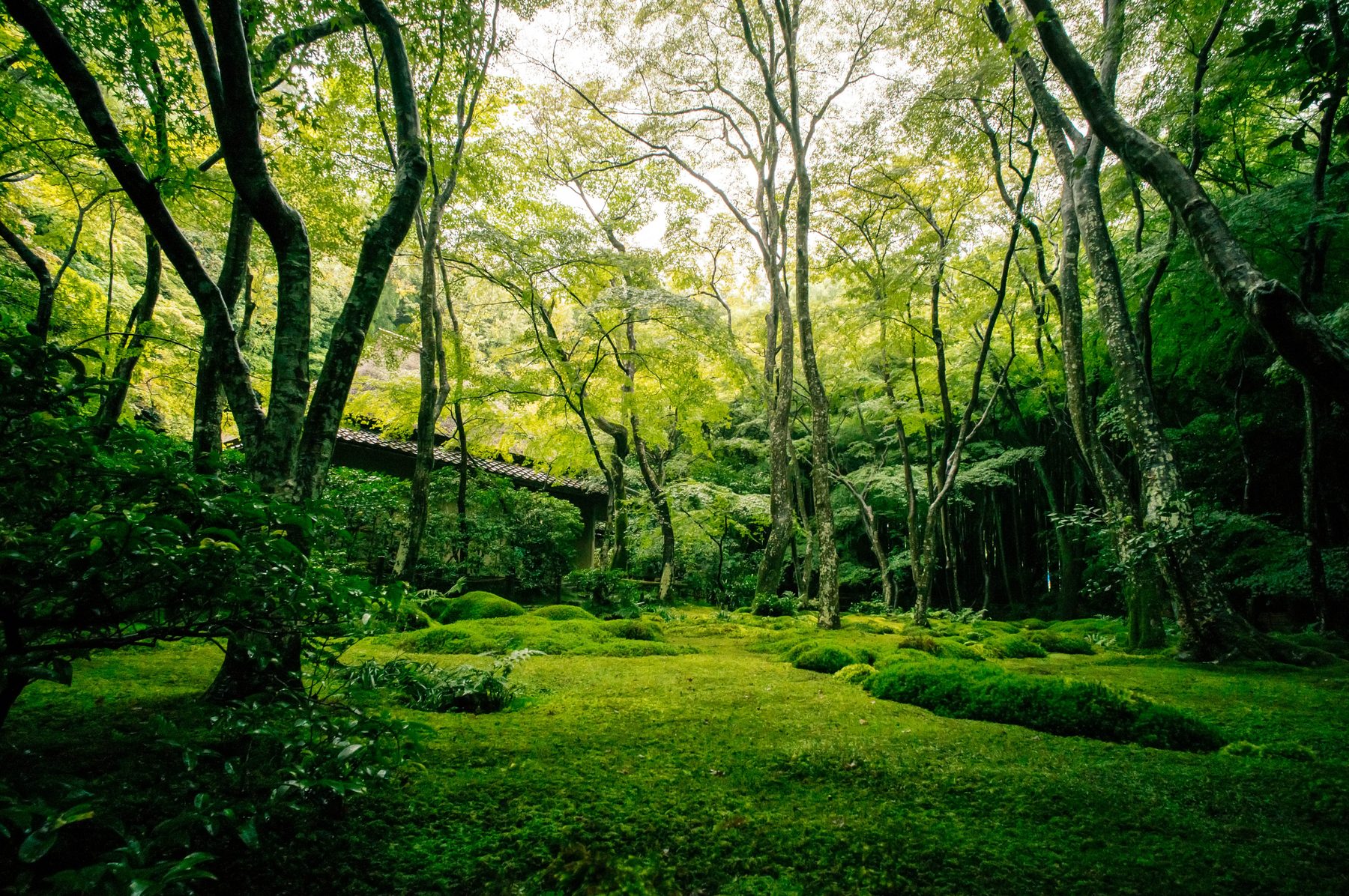
Early morning: the grove. Start at the bamboo while it is quiet and take your photos then. This is the only part of the route where the clock really matters.
Mid-morning: Tenryu-ji. Walk into the garden when it opens, and give it the time the grove does not need: a slow lap of the pond and a sit on the veranda.
Late morning: north into Sagano.Take a taxi up to Otagi Nenbutsu-ji on a day it is open, then walk down the old road through Saga-Toriimoto, stopping at Adashino Nenbutsu-ji and its bamboo path, and Gio-ji's moss garden on the way back toward the river.
Lunch. Sagano is known for tofu, simmered as yudofu or served as yuba, and for long, quiet lunches in old houses and temple restaurants. Two of the families below ended their mornings exactly that way. After lunch, the river and Togetsukyo Bridge are an easy place to finish, or the start of an afternoon on the water.
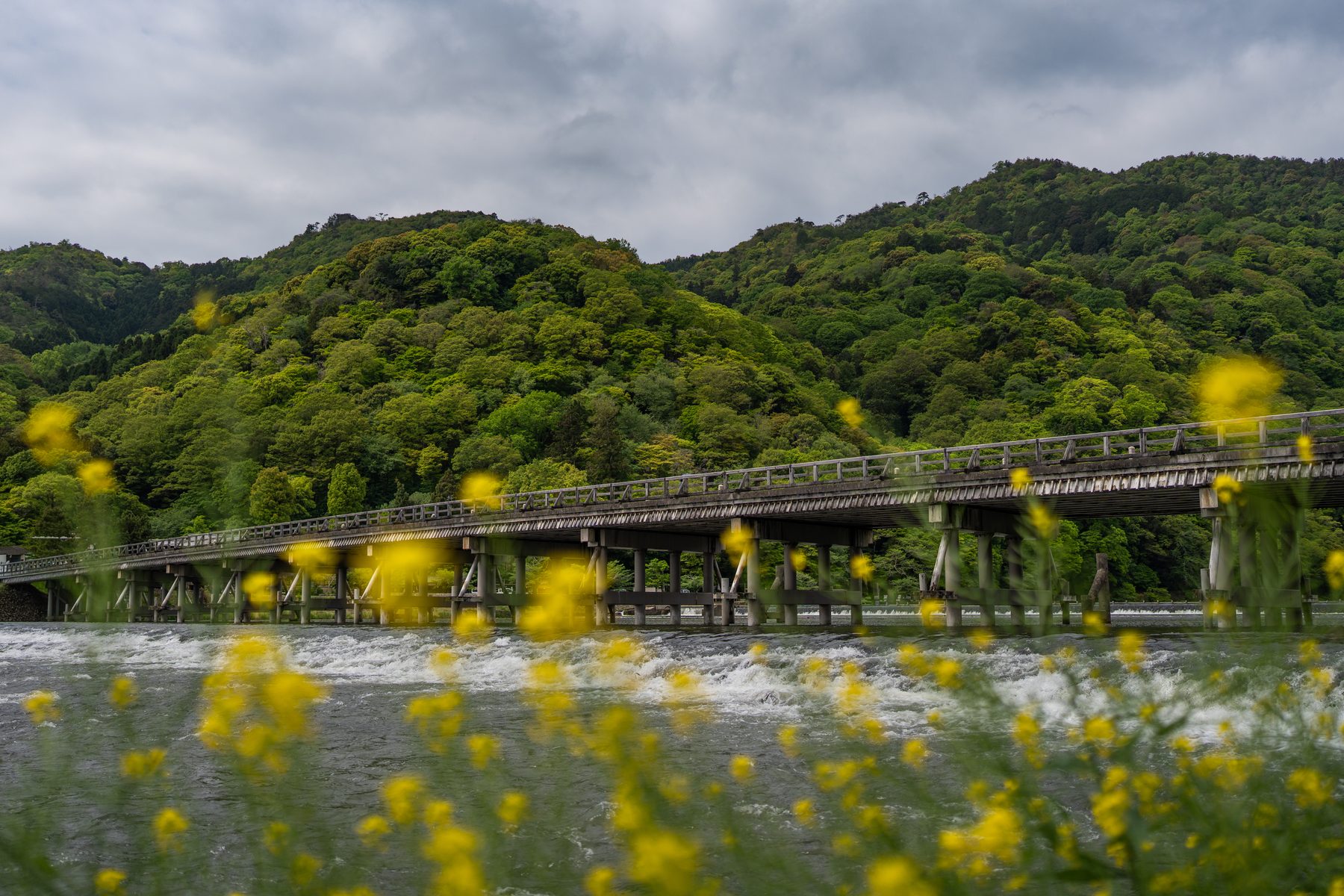
A full day
The Sagano scenic train and the Hozu River
At a glance
For a full day, ride the Sagano scenic train up the gorge in the morning and come back down the Hozu River by boat, arriving in Arashiyama in time for lunch, kimono or the grove.
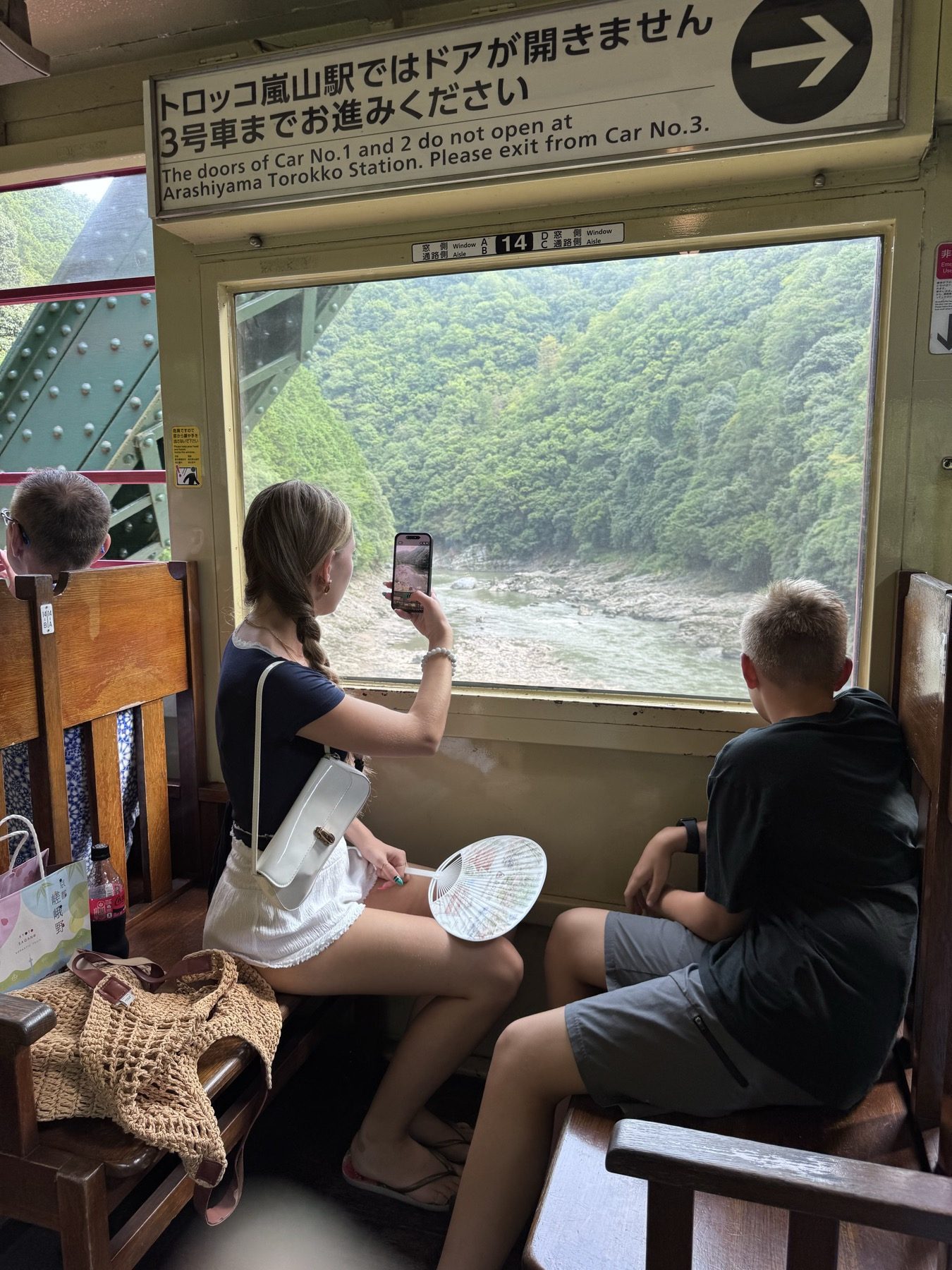
The scenic train runs slowly along the gorge of the Hozu River, with open-sided carriages, and the boats come back down the same river, steered off the rocks by boatmen with long poles. Together they make a half day of their own, and they turn Arashiyama from a morning into a full day.
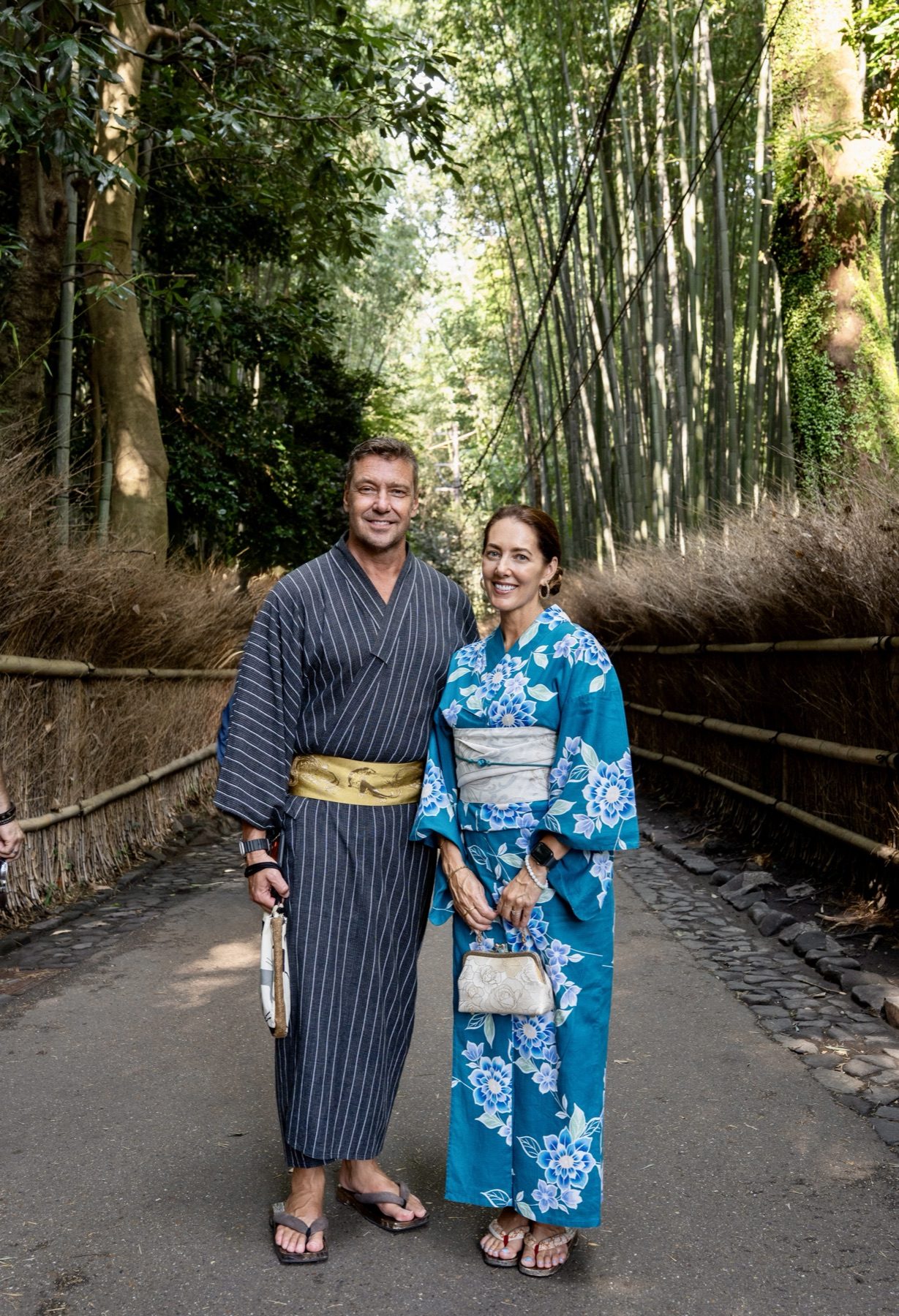
One family we planned for this summer did exactly that: the rock garden at Ryoan-ji at eight, the 9:02 scenic train, and the long boat ride back to Arashiyama. In the afternoon they climbed to the monkey park on Mt. Iwata in the heat, then changed into kimono for Tenryu-ji's garden and the bamboo grove, with a photographer alongside. The kimono had to be back at the shop before six, which set the pace for the afternoon.
The train and the boats are both popular in summer and autumn, and the boats depend on the river. Book the train ahead, and keep a backup for the afternoon in case the water is too high or too low for the boats.
Real trips
How three families spent their Arashiyama day
At a glance
A dawn start with the grove to themselves. Kimono and a tea ceremony before the bamboo. And the train and the river, with kimono in the afternoon. Three different days, all in the same small corner of Kyoto.
Late June: the early start. The family from the opening of this guide was collected from their hotel at seven, walked the bamboo grove while it was still empty, then saw the rock garden at Ryoan-ji and Togetsukyo Bridge. Otagi Nenbutsu-ji was closed for the day. Lunch was yudofu, served course by course in a private room in Sagano. Read their ten days.
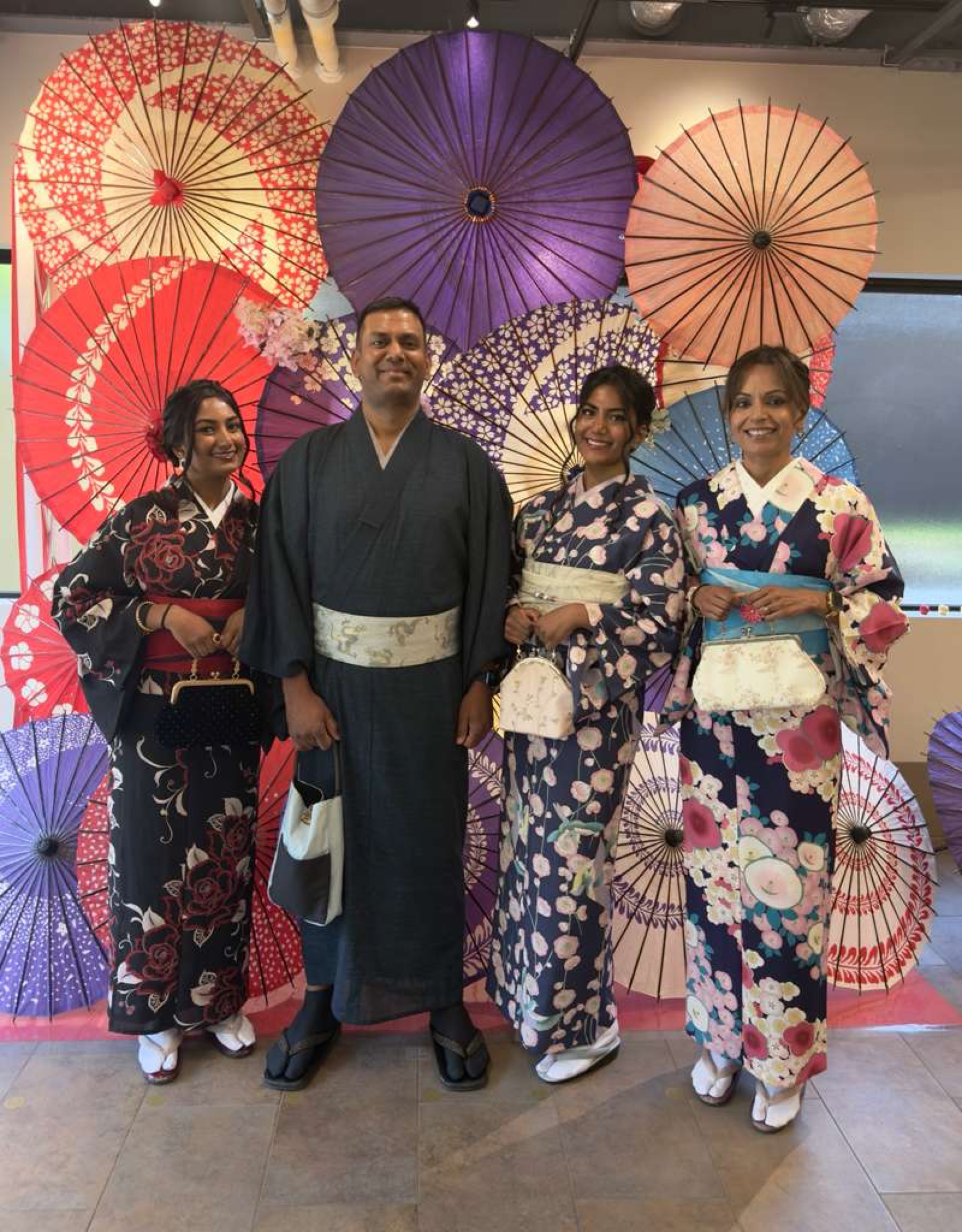
Late May: kimono and tea. On their last morning in Kyoto, another family changed into kimono, sat for a private Zen tea ceremony, then walked the bamboo grove taking photograph after photograph, and ended with a lunch of yuba in Sagano before an afternoon at Nijo Castle. Read their seven days.
Late July: the full day. A third family used Arashiyama as the end point of the scenic train and the river boats, then spent the afternoon in kimono at Tenryu-ji and in the grove, as above.
What the three days have in common is the useful part. Each one fixed the time-sensitive things first, the empty grove, the train, the kimono return, and let the rest fit around them. And the one thing that went wrong, a closed temple, was a matter of the day of the week.
The early pickup, the day of the week, the train seats, the kimono back by six. That is the part of an Arashiyama day we usually take care of. Start a conversation →
The difference
All of it, or just part of it
Arashiyama itself is easy to walk. What takes planning is the timing around it: how early the day can start, which temples are open on your date, and how the grove, the river and the rest of Kyoto fit into the same day.
We can plan the whole trip, or only the days that get complicated, and leave the rest to you.
Plan your Kyoto days →Questions, answered
Is Arashiyama worth it beyond the bamboo grove?+
Yes, if you give it the rest of the morning. The grove itself is a short walk. Around it are the garden at Tenryu-ji, the river and Togetsukyo Bridge, and to the north the quieter temples of Sagano, including Adashino Nenbutsu-ji with its own bamboo path and Otagi Nenbutsu-ji with its hundreds of carved stone figures.
What time should you visit the Arashiyama bamboo grove?+
As early as you can, ideally before 8 a.m. One family we planned for this year was picked up from their hotel at seven and walked the grove while the path was still empty. By mid-morning it is one of the busiest places in Kyoto.
Is there a quieter bamboo path than the main grove?+
Adashino Nenbutsu-ji, a short way north, has a bamboo-lined stone path inside the temple grounds that sees far fewer people. It charges admission and keeps temple hours, so it is a mid-morning stop rather than a dawn one.
Is Otagi Nenbutsu-ji open every day?+
No. It is closed on Wednesdays and Saturdays, and open 9:00 a.m. to 4:00 p.m. on other days. One family we planned for this year arrived on a Wednesday to find the gates shut. Check the day of the week before you build a morning around it.
How much time do you need in Arashiyama?+
Half a day covers the bamboo grove, Tenryu-ji's garden and one or two of the quieter temples to the north. A full day lets you add the Sagano scenic train and the boat ride down the Hozu River, or a long lunch in Sagano.
Is Arashiyama good with children?+
Yes, with an early start. The bamboo grove is a flat, easy walk, the river and bridge are good for a break, and older children tend to enjoy the scenic train and the river boats. The walk up to the quieter temples in the north is gentle but longer, so a taxi or car for part of it helps with younger children.
Can you use the Japan Rail Pass to get to Arashiyama?+
Yes, on the JR Sagano Line to Saga-Arashiyama Station, which is a JR line. The Randen tram and the Hankyu line into Arashiyama are private railways, and the Japan Rail Pass rules say private railway sections are paid separately. Torokko Saga Station, where the Sagano scenic train starts, is right next to Saga-Arashiyama Station.
What are the opening hours and admission for Tenryu-ji's garden?+
The garden is open 8:30 a.m. to 5:00 p.m., with last entry at 4:50 p.m.. Admission is ¥500 for high school students and adults and ¥300 for elementary and junior high school students, according to Tenryu-ji. Hours and fees can change, so check the temple's own page before you go.
What are the opening hours and admission for Adashino Nenbutsu-ji?+
It is open from 9:00 a.m., with last entry at 4:30 p.m. (3:30 p.m. in December, January and February). Admission is ¥500 for adults and ¥400 for junior and senior high school students, with younger children free when accompanied by a parent, according to the temple. It is a mid-morning stop, after the main bamboo grove at dawn.
Do you need to book the Sagano scenic train in advance?+
It is worth it, especially in cherry blossom and autumn leaf season. Reserved seats go on sale online at midnight Japan time one month before the date of travel. If they sell out, a limited number of standing tickets are sold on the day at the stations.
Can you bring a stroller or luggage on the Sagano scenic train?+
A stroller has to be folded and kept at your seat. Bags up to about 120 cm in total dimensions ride free, and anything longer than 1 meter is not allowed on board. A fare is needed from elementary school age, six and over; an infant on a parent's lap rides free.
Continue exploring
Japan changes its prices and its rules more often than most countries, and a good deal of what is written about it online is quietly out of date. The fares, fees, taxes and access rules on this page were checked against the official sources below in October 2026. Where something was likely to move, we have said so in the text. If you are traveling on dates far from that, check the official page — or ask us — rather than trusting any guide, including this one.
Checked against