
Travel Guide · Planning
Japan Travel Agent or Plan It Yourself?
What is easy to do on your own, what is hard from overseas, and how to hand off only part of it.
One of the families we planned for this summer usually organizes its own travel. For eleven days in Japan in late July, with two children and four cities, they decided to share the planning, and kept several days for themselves. Afterward, this is how they put it:
“We were never the kind of family that wanted a guided tour, but this really changed our minds.”
The question behind that sentence is the one many independent travelers ask about Japan: is this a country to plan yourself, or one where help is worth paying for? The honest answer is that it depends on which parts of the trip you mean. This guide separates the parts that are easy to do on your own from the parts that are hard to arrange from overseas, explains how to hand off only some of it, and shows how three families we planned for this year split the work.
At a glance
Plan it yourself if your trip is mostly trains, hotels and the well-known sights: Japan makes that easy. Get help for the things that are not sold online or not in English, for the long days with luggage and drivers, and for changes during the trip. And if you usually travel independently, you do not have to choose: hand off only the parts that are hard, and keep the rest.
On your own
What is easy to plan yourself in Japan
At a glance
Trains, hotels, the major sights and most meals.Japan's transport is punctual and signposted in English in the big cities, and most hotels and famous temples can be booked or visited without help.

For a confident traveler, most of a classic Tokyo, Kyoto and Osaka trip is straightforward. The bullet train connects the three cities, local trains and subways take you almost everywhere, and English signs and announcements cover the routes visitors use most. If your route makes it worthwhile, the Japan Rail Pass is sold on JR's own website; a seven-day pass in the ordinary class is ¥50,000, and whether it pays for itself depends on how far you travel.
Hotels, the big temples and shrines, museums and casual restaurants are the same: bookable online, or simply walk-in. A free day in Tokyo, an afternoon of shopping, a morning in a park with deer: these are the parts of a trip that many families most enjoy planning themselves, and they lose nothing by doing so.
From overseas
What is hard to arrange from overseas
At a glance
Things arranged through people rather than websites. Some restaurants, private dinners with a maiko, visits to working craftsmen, and the private guides and drivers that make the long days work.
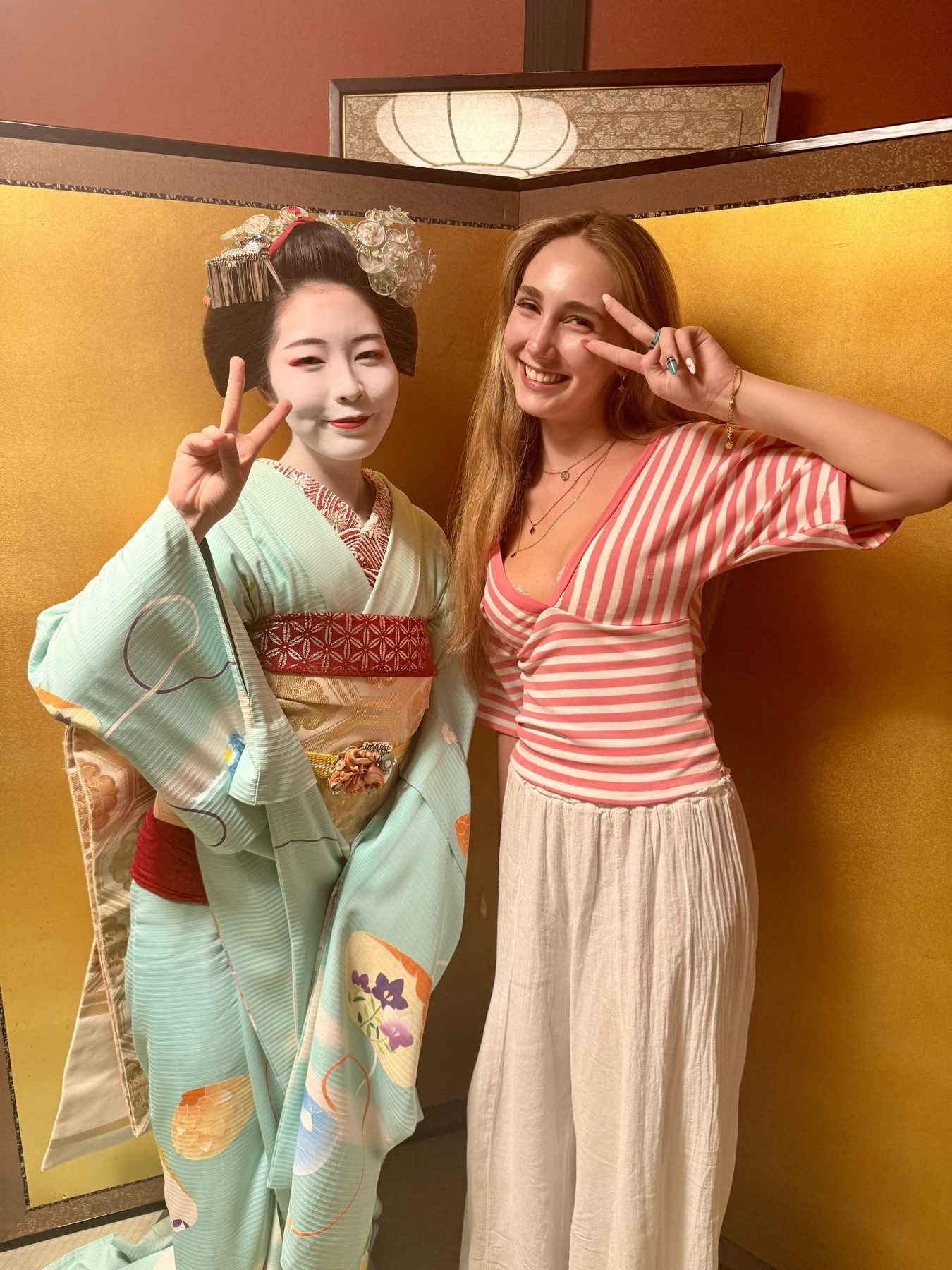
The memorable parts of a Japan trip are often the ones you cannot add to a basket. A private dinner with a maiko, a morning at a working swordsmith's forge, a small restaurant that takes reservations by phone in Japanese: these are arranged through people, by someone who knows whom to ask and can explain what the guest needs. From another country, in another time zone, that is slow and uncertain.
The second hard part is the shape of the long days: moving between cities with luggage, a driver for a day in the mountains, a guide who knows when the crowds arrive. Each piece is possible to book alone, but fitting them together, and knowing which ones matter for your family, is where planning takes time.
For what a private guide actually does, and when one is not worth it, see our guide to private guided tours in Japan.
The part nobody plans
When the plan changes during the trip
At a glance
Weather, tired children and long lunches change plans. Doing it yourself means rebooking on the spot, in Japanese, on a phone. With a planner, it means a message.
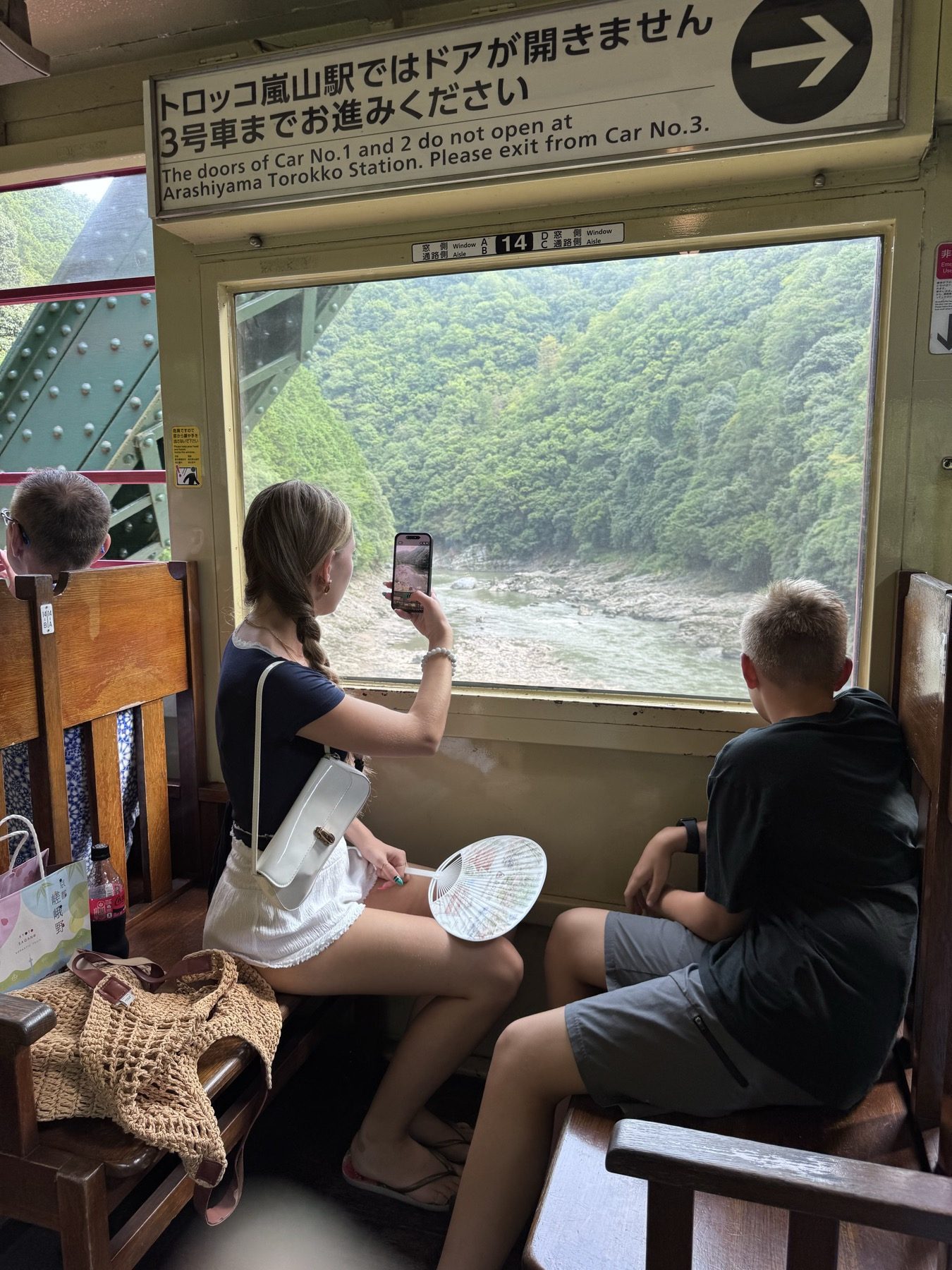
The part of independent travel that rarely shows up in the planning is what happens once you arrive. A typhoon moves toward the coast; lunch is so good that nobody wants dinner; the heat is worse than the forecast. None of it is a crisis, but each one means cancelling, rebooking or rearranging something, and in Japan that often means a phone call in Japanese.
For the family in July, a lunch in Tokyo went so well that they asked us that afternoon to cancel the dinner we had reserved. We called the restaurant, and the evening was theirs. On a hot morning by the river, we offered to place a coffee order ahead of their arrival at the river; the father wrote later that it was:
“a very good call in the heat of the moment.”
The middle way
How to hand off only part of the trip
At a glance
Hand off the hard parts, keep the rest. A good split for independent travelers: transfers, the long days with guides or drivers, and the reservations that are hard to get, while keeping free days and your own dinners.
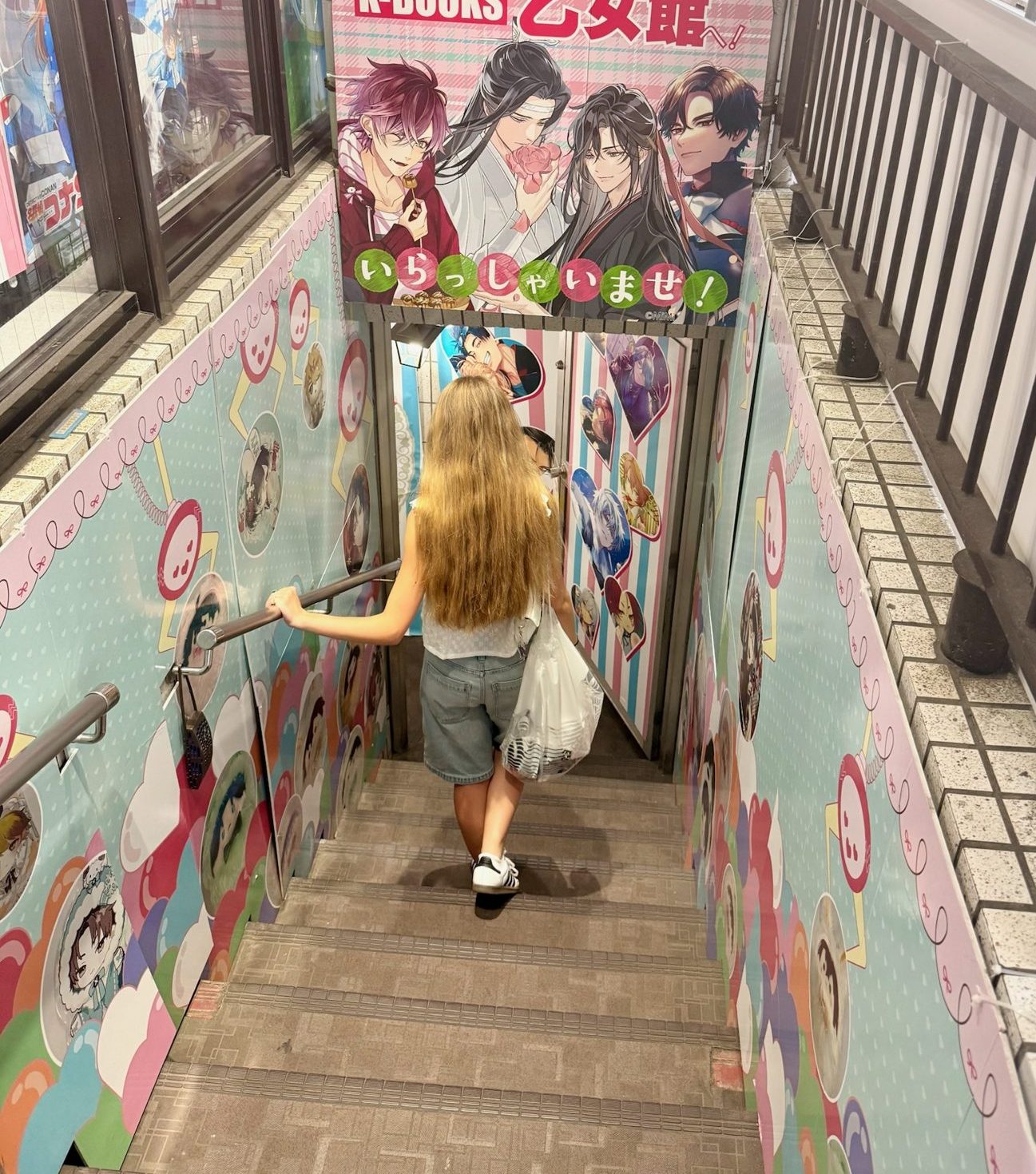
You do not have to choose between a fully planned trip and doing everything yourself. The family who opens this guide gave us a specific list: the airport pickup and the bullet train, guides and private drivers on the long days, photographers, and a handful of reservations that are hard to get, including the maiko dinner and the swordsmith's forge. They kept a free day in Tokyo, Nara without a guide, a Saturday in Osaka and several dinners of their own choosing.
That split is a good starting point for anyone who enjoys planning. Go through your trip day by day and ask two questions of each one: is any part of it hard to book from home, and will the day fall apart if something changes? Hand off the days where the answer is yes, and keep the ones where it is no.
Choosing
What to ask a Japan travel planner before you book
At a glance
Who you will talk to during the trip, which parts are booked and which are only suggested, whether they can change things on the day, and whether you can hand off only some days.
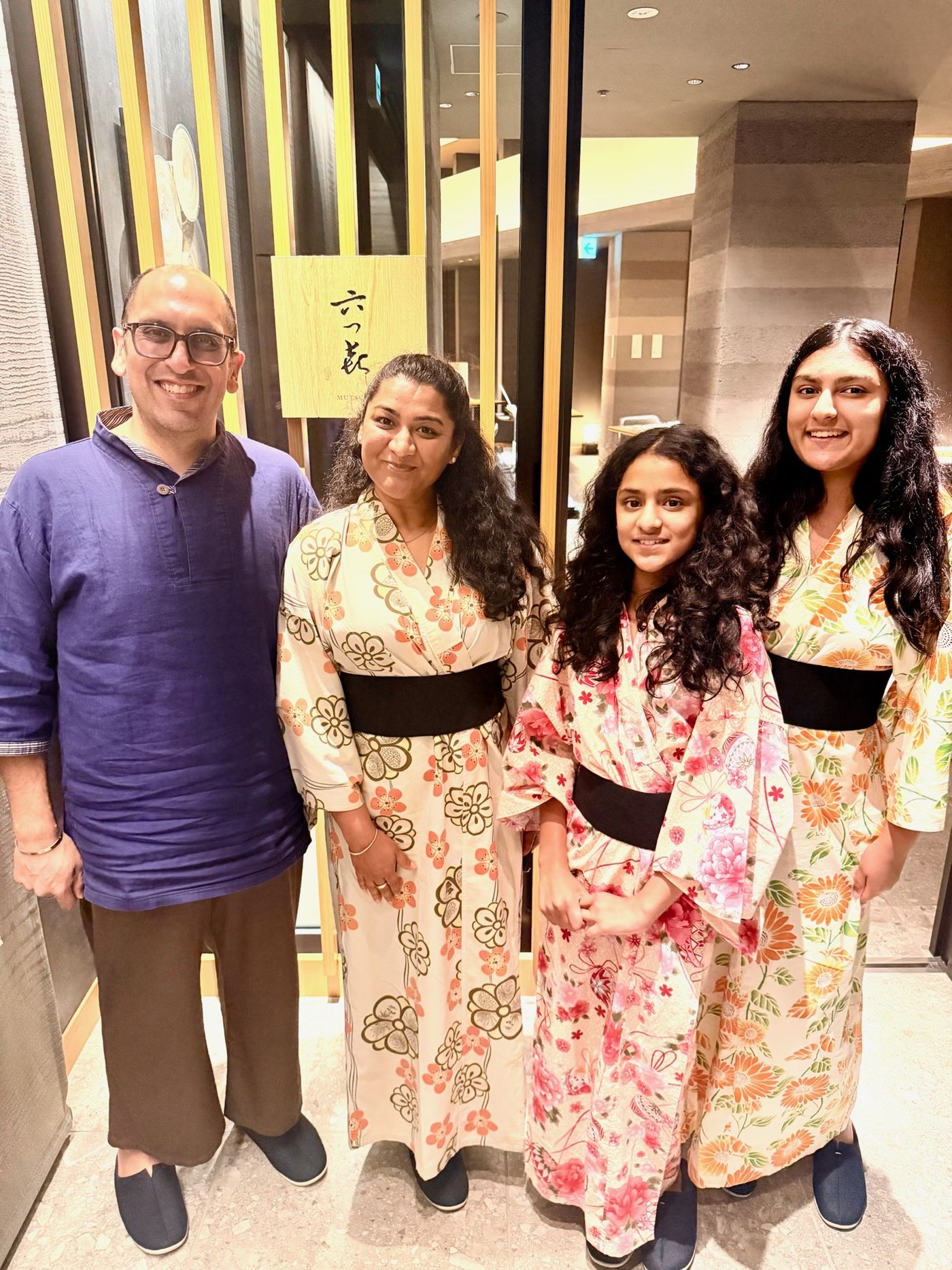
If you decide to use a planner or agent, the useful questions are practical ones. Who will you talk to while you are in Japan, and how quickly do they reply? Which parts are actually booked, and which are suggestions you will book yourself? Can they change things on the day, or only before you leave?
Ask, too, how your dietary needs reach each restaurant and hotel. For one family in June, every preference had been given to their ryokan in Hakone in advance, so nothing needed explaining when they sat down to a multi-course dinner. And ask whether you can hand off only some days. A planner who insists on the whole trip is not the right fit for a family that likes to travel on its own.
Real trips
How three families split the work
At a glance
Part of it for a family that usually travels independently. A change of course when a typhoon arrived. And the details ahead of time for a family with dietary preferences. Three different reasons to hand something off.
Late July: handing off only the hard parts.The family from the opening of this guide came to us on the recommendation of another family, and kept much of the trip for themselves: a free day in Tokyo, Nara on their own, a Saturday in Osaka. The parts we took on were the ones that are difficult from overseas, from the airport pickup to the maiko dinner and the swordsmith's forge.
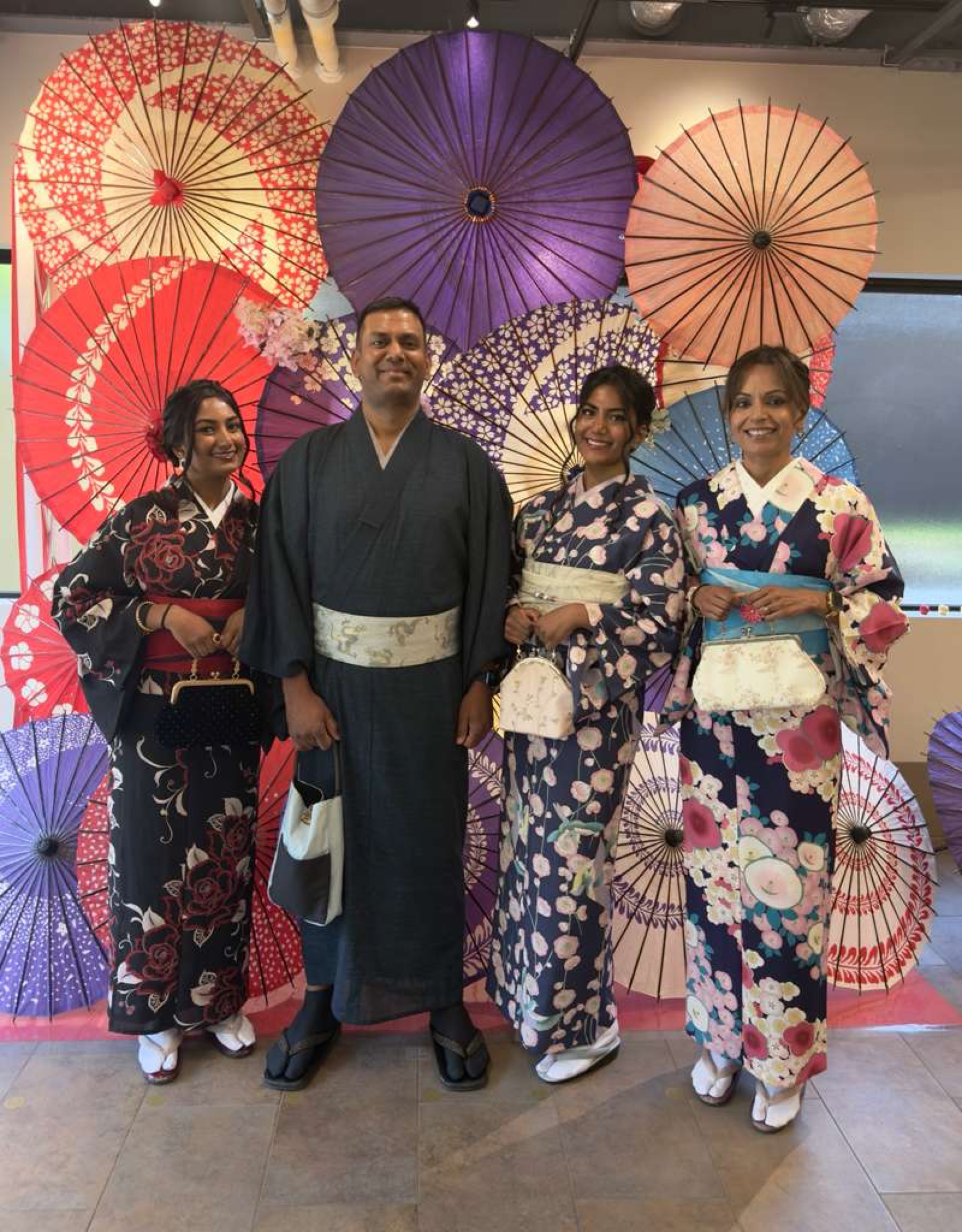
Late May: changing course for a typhoon. With a typhoon tracking toward western Japan, a family from Las Vegas spent a day in Nara rather than pushing on with the original plan. On their last day in Kyoto, with the storm closing in, their train tickets to Hiroshima for the next day were refunded quickly, so they could change course before the weather did. Read their seven days.
Mid-June: the details ahead of time. A family of four with dietary preferences had them passed to their restaurants and to their ryokan before they arrived, so meals were simply meals. Read their ten days.
None of the three needed help with the trains or the temples. What they handed off were the parts that take time, language or contacts, and the changes that happen once you are there.
If you like planning your own travel but want help with the days that get complicated, that is the part we usually take care of. Start a conversation →
The difference
All of it, or just part of it
Some families want every day arranged. Others want the trains and temples for themselves and help only with the reservations, the long days and the changes along the way.
We can plan the whole trip, or only the days that get complicated, and leave the rest to you.
Tell us which days you want help with →Questions, answered
Do you need a travel agent to visit Japan?+
No. Japan is one of the easiest countries to travel on your own: the trains run on time, signs are in English in the big cities, and hotels and most sights can be booked online. A travel agent or planner earns its place on the parts that are hard to arrange from overseas, such as certain restaurants, private guides and drivers, and experiences that are arranged through people rather than websites.
What is hardest to plan yourself in Japan?+
Reservations that are not sold online, or not in English: some restaurants, private dinners with a maiko, visits to craftsmen's workshops. After that, the logistics on the long days, such as moving hotels with luggage, and anything that has to change during the trip because of weather or tired children.
Can you use a travel agent for only part of a Japan trip?+
Yes, and for families who usually plan their own trips it often works best. One family we planned for this summer handed us the airport pickup, the bullet train, guides and drivers on the long days, photographers and a few hard reservations, and kept a free day in Tokyo, a day in Nara without a guide, a Saturday in Osaka and several dinners for themselves.
Is it cheaper to plan a Japan trip yourself?+
Usually, if you count only the bookings. A planner or agent adds a cost, and private guides and drivers cost more than trains. What you get for it is time before the trip, access to things that are hard to book, and someone to change the plan when it needs to change. Whether that is worth it depends on how much of the trip falls into those categories.
What should you ask a Japan travel planner before booking?+
Who you will talk to during the trip and how fast they reply; which parts are booked and which are only suggestions; whether they can change things on the day; how your dietary needs reach each restaurant and hotel; and whether you can hand off only some days rather than the whole trip.
Do you need to book the bullet train in advance in Japan?+
Not on most days. Hikari and Kodama trains keep non-reserved cars. The exception is the big holiday periods, such as Golden Week, Obon and New Year: every seat on every Nozomi train between Tokyo and Hakata is reserved-only, and without a reserved seat you may have to stand or may not get on a crowded train. At stations, reserved seats go on sale one month before the travel date, at 10 a.m., so book early if your dates fall in one of those periods.
What happens if a typhoon cancels your train in Japan?+
On JR Central's bullet trains, if your train is cancelled and you do not travel, the full fare and charges are refunded. If a limited express arrives two hours or more late, the limited express charge is refunded, but not the fare. The harder part on a self-planned trip is everything else booked for that day: hotels, guides and restaurants each have to be changed separately, often by phone. In late May, one family we planned for had their next-day tickets to Hiroshima refunded and spent the day in Nara instead.
Is the Japan Rail Pass worth it if you plan the trip yourself?+
Only if you travel far enough to use it. A seven-day pass in the ordinary class is ¥50,000 on JR's official site. It does not cover Nozomi or Mizuho bullet trains unless you also buy a special ticket, which is ¥4,960 between Tokyo and Kyoto. Price your actual route with ordinary tickets first, then compare.
Can you take large suitcases on the bullet train?+
Yes, within limits. Bags up to 160 cm in total (length + width + height) go in the racks or at your feet; bags over 250 cm cannot be brought on board. On the Tokaido, Sanyo and Kyushu Shinkansen, a bag between those sizes needs a reserved seat with an oversized baggage area; bring one without that reservation and you pay ¥1,000. For families moving cities with several large cases, this is worth sorting out before the travel day.
Do you need cash in Japan, or can you pay by card?+
Bring some cash as well as cards. In the Japan Tourism Agency's latest survey of visitors, trouble using a credit or debit card was reported by 10.7% of respondents, and restaurants were where it happened most often (32% of those cases).
What app should you have for emergencies on a self-planned Japan trip?+
The Japan Tourism Agency's Safety Tips app. It sends alerts for earthquake early warnings, tsunami warnings and other weather warnings in Japan, and works in 15 languages, including English. Without a planner, it is the simplest way to hear about a warning at the same time as everyone else.
Continue exploring
Japan changes its prices and its rules more often than most countries, and a good deal of what is written about it online is quietly out of date. The fares, fees, taxes and access rules on this page were checked against the official sources below in July 2026. Where something was likely to move, we have said so in the text. If you are traveling on dates far from that, check the official page — or ask us — rather than trusting any guide, including this one.
Checked against
- Japan Rail Pass — official prices (JR Group)
- JR Central — Nozomi all-reserved periods (Japanese)
- JR Central — when trains are cancelled or delayed (English)
- Japan Rail Pass — Nozomi & Mizuho supplement (JR Group)
- JR Central — oversized baggage rules
- Japan Tourism Agency — visitor survey on problems during travel (Japanese)
- Japan Tourism Agency — Safety Tips app for visitors