
Travel Guide · Planning
Typhoons & Rain in Japan: How to Keep Your Trip on Track
What to do when the forecast turns, and how a typhoon week can still end well.
Five days before the end of his family's week in Japan, a father of two sent us a short message from Tokyo:
“Looks like we are getting a little typhoon come through next week on Tuesday and Wednesday, which is our travel days to Hiroshima as well as to Nara Park. We may have to change things up a little bit.”
It is one of the most common worries we hear, and it usually arrives the same way: a weather app, a spiral on the map, and the two days of the trip that matter most sitting right underneath it. This guide covers what we actually do in that moment. When typhoons come, how to read the forecast without panicking, what happens to your bullet train and your money, and how to rebuild a day instead of losing it. At the end, you can see how that family's typhoon week really went.
At a glance
Typhoons peak in August and September, but they can come any time from late spring to fall. Do not cancel early: the track a week out is a guess. Watch the Japan Meteorological Agency map, move outdoor days forward rather than back, stay put on the storm day itself, and make sure every booking can be cancelled for weather without a fee. The rainy season (June to mid-July) is different: it slows a trip down, it rarely stops one.
Timing
When do typhoons hit Japan?
At a glance
On the Japan Meteorological Agency's 30-year averages, typhoons come close to Japan about 11.7 a year and actually make landfall about three a year. August and September are the peak. June and October are quieter, not empty.
A typhoon is the Pacific's name for a hurricane. They form far to the south and tend to curve north toward Japan through the summer and early fall. The agency counts one as approaching when its center comes within 300 kilometers of a weather station in Japan, which is close enough to bring wind, heavy rain and disrupted transport even when it never crosses the coast.
| Month | Typhoons approaching Japan (avg.) | What it means for a trip |
|---|---|---|
| May – June | 0.7 – 0.8 | Uncommon, but it happens. Know your plan B. |
| July | 2.1 | Build one flexible day into the itinerary. |
| August – September | 3.3 each | Peak season. Plan for a disrupted day as a likelihood. |
| October | 1.7 | Tapering off, with lovely weather in between. |
None of this is a reason to avoid late summer. It is a reason to plan for it. A trip in August or September should have at least one day that can move, and the long-distance travel days, the ones that are hardest to shift, should not all sit back to back at the end.
Before you decide
How should you read a typhoon forecast?
At a glance
Use the Japan Meteorological Agency typhoon map (available in English), not a generic weather app. Treat the track a week out as a rough guess, and make your real decisions two to three days ahead.
The first instinct when a storm appears on the map is to cancel the days underneath it. Resist it. When our guest sent that message, our planner's first reply was simple: typhoons are not always accurately predicted, so he would not consider those days lost yet. That turned out to be right. Over the next two days the predicted track shifted south, and the days that needed to change were not quite the ones it had first looked like. The decisions were made once the track firmed up, not before.
The Japan Meteorological Agency is the source the rest of Japan works from: trains, airlines, schools and city offices all take their decisions from its warnings. Its typhoon map shows the forecast track and the widening cone of uncertainty around it. The width of that cone is the honest answer to “will it hit us?” Five days out it is wide. Two days out it narrows enough to act on.
Install one app before you fly. The Japan Tourism Agency's Safety Tips app sends push alerts in English (and fourteen other languages) for earthquake early warnings, tsunami warnings and other weather warnings inside Japan. It is the closest thing to having a local tell you when to take the forecast seriously.
Getting around
What happens to the bullet train in a typhoon?
At a glance
Shinkansen services slow or stop when wind and rain pass safety limits. According to JR Central, if your train is cancelled and you give up the trip, you get back the full fare and charges. If it arrives two hours or more late, the limited express charges come back.
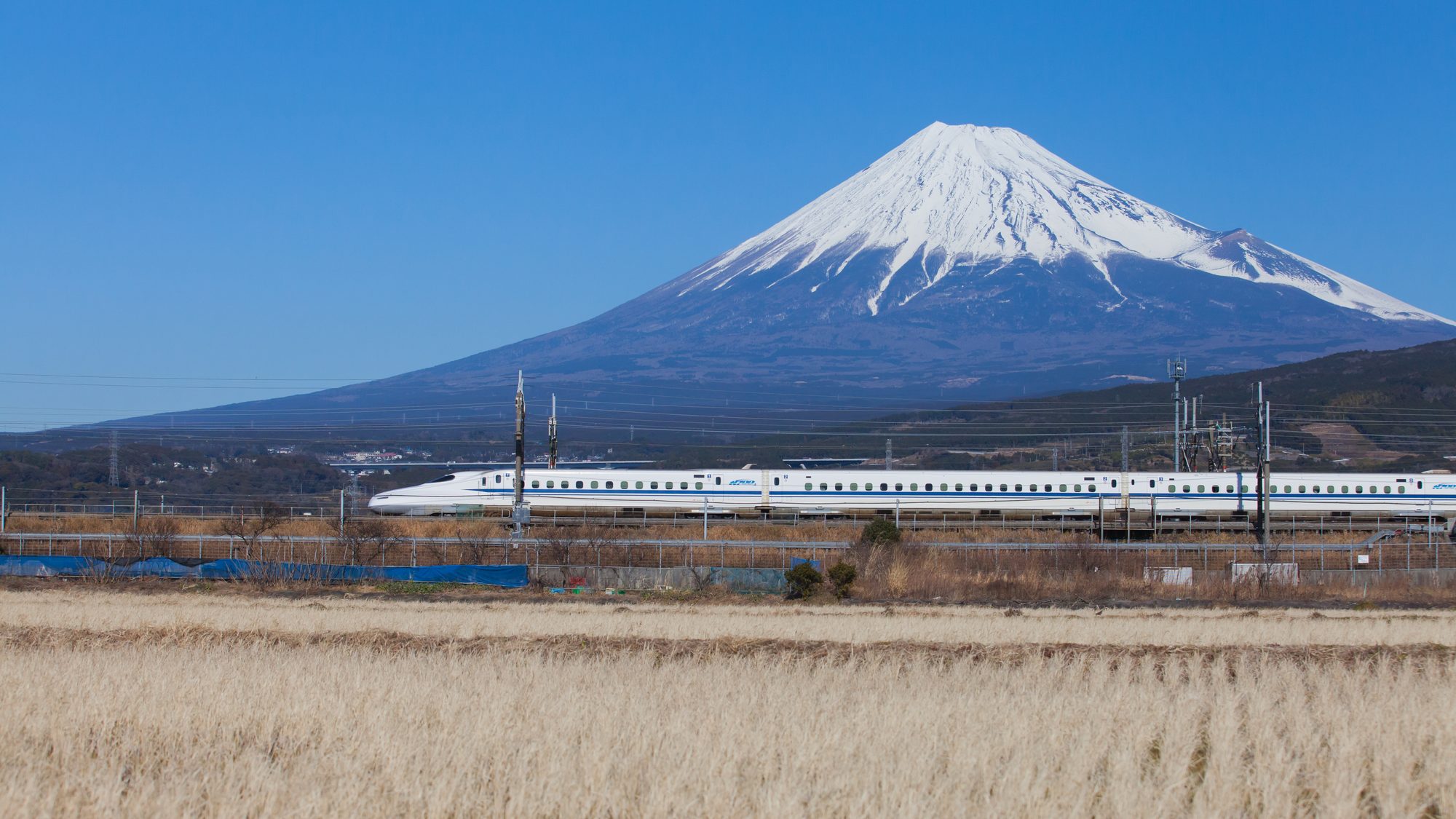
Japan's railways do not gamble with weather. When a strong typhoon approaches, operators often announce reduced or suspended service in advance, sometimes the evening before. That is good news for safety and frustrating for anyone with a ryokan booked three hundred kilometers away. The worst place to be on a typhoon day is a crowded station, waiting for a train that will not run.
The money, at least, is straightforward. On JR Central's published rules, a cancelled ride means the full fare and charges are refunded; if a suspension forces you to abandon a trip partway, you can return to the station you started from at no charge. Discounted tickets and rail passes follow their own rules, so ask the staff at the ticket office, and keep your ticket.
The practical lesson is about timing, not refunds. If a storm is forecast for the day you planned to move cities, move the day before, or move the day after. Do not plan to travel straight through it.
The method
How do you rebuild a day around a typhoon?
At a glance
Four moves: pull outdoor plans forward into the clear days before the storm, stay put on the storm day, turn it into an indoor day close to your hotel, and book everything on terms that let you cancel for weather.
Most travelers think about a typhoon as a problem for the day it arrives. The better way to think about it is as a reshuffle of the three or four days around it. The days before a typhoon are often clear, hot and perfectly usable. That is when the outdoor plans, the deer park, the hike, the garden, should happen.
- Pull outdoor days forward. If the park or the mountain is scheduled for the storm day, look for a way to do it a day or two earlier, even if it means swapping with something else.
- Stay put on the storm day. Cancel the long transfer, keep the hotel, and if needed extend a night rather than moving through the weather.
- Make it an indoor day, close to home. Museums, a digital art space, a cooking class, a long lunch, a spa, or a salon that comes to you. Short distances matter more than the activity.
- Book on weather-proof terms. Before you pay for any guide, car or experience, ask what happens if weather cancels it.
That last point matters more than it sounds. On a different family's trip, in the rainy season, we proposed booking a riverside lunch so the children could do the flowing-noodle experience in the hills above Kyoto. The father's only question was the right one:
“We don’t get charged if they cancel as result of weather right?”
Once we confirmed that a weather cancellation would cost them nothing, the answer came back in seconds: “Let's do it.” Flexibility is what makes people willing to book the good things at all.

Moving a day, cancelling a guide, finding a car when every local company is booked out, getting the refunds back: it is a lot of phone calls to make in a language you do not speak, in the middle of your holiday. That part we take on. Start a conversation →
June and July
Is the rainy season a reason to avoid Japan?
At a glance
No. The rainy season (tsuyu) typically runs around June 7 to around July 19 around Tokyo and around June 6 to around July 19 around Kyoto and Osaka. It means showers and humidity, not a lost trip.
The rainy season and typhoon season are easy to confuse, and they are very different things. A typhoon is a single storm that can shut down transport for a day. The rainy season is a stretch of several weeks when a seasonal front sits over Japan, bringing overcast skies, showers and humid heat, often with dry spells in between. It is also when hydrangeas line the temple paths and the moss gardens are at their most vivid.
Before one family's June trip, our planner wrote to them about the weather. Hotels keep loaner umbrellas, a light raincoat that breathes in the heat and proper shoes are worth packing, and private transport between stops takes most of the sting out of a wet day. He ended the note with a line we still use:
“The rain won’t hurt you. We’ll just plan around it.”
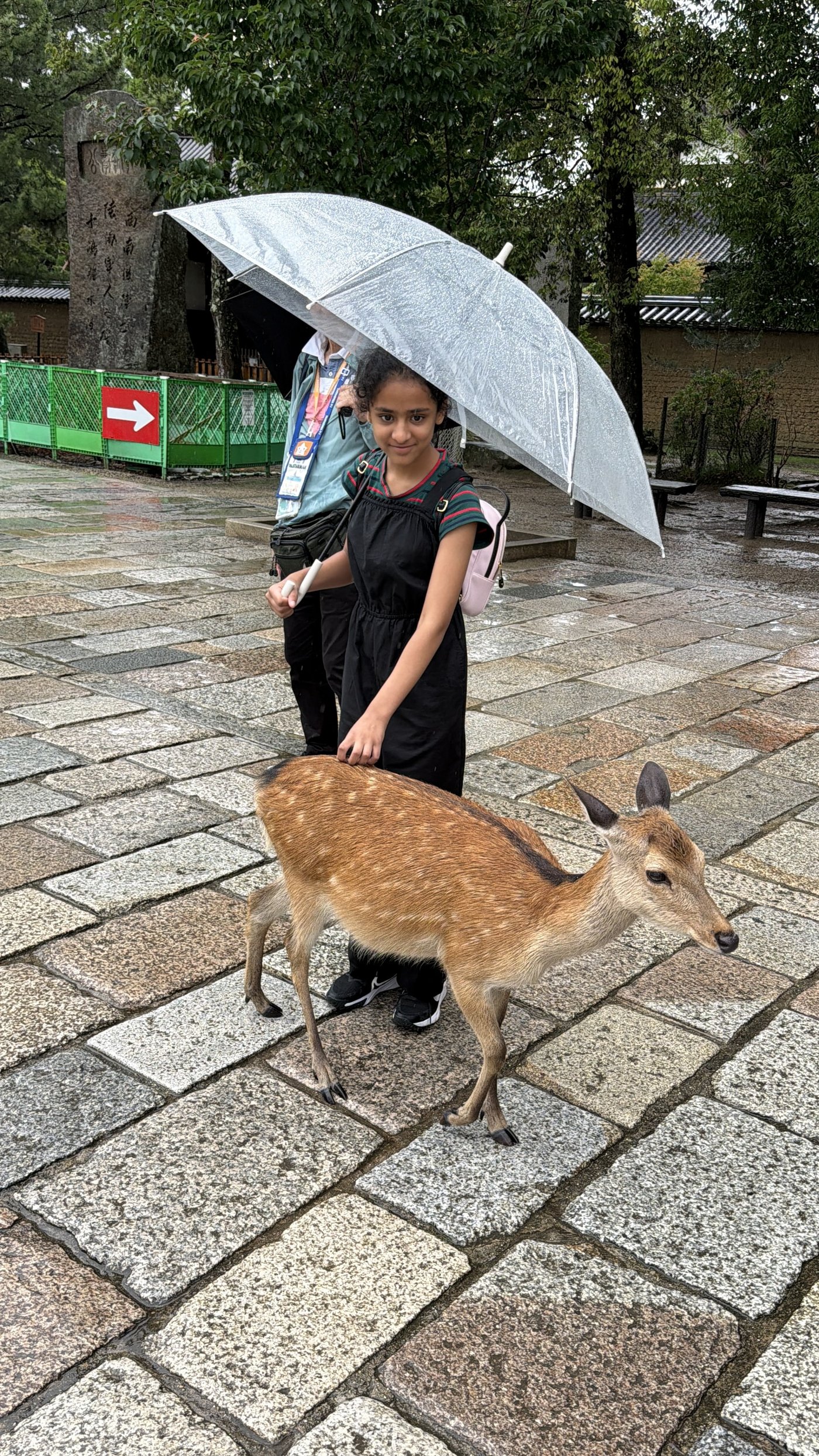
It did rain, one afternoon, in Nara. It became one of the best photographs of their ten days. You can read the whole trip in our story of that family's ten days in Japan.
In the rainy season, the thing to watch is the heat as much as the rain. On the dry days, start early, put the long walks in the morning, and keep the afternoon for something indoors and air-conditioned.
A real trip
What did a real typhoon week look like?
At a glance
For the family from Las Vegas, the typhoon cancelled one day trip and one tour. It did not cancel the ending. Nara moved forward, the final day became an indoor day in Kyoto, and every cancelled service was refunded.
Here is how the five days after that first message actually went, from our side of the conversation.
| Day | What happened |
|---|---|
| Day 1 | The forecast appears. We hold off on cancelling anything and send two indoor ideas for the days that might be lost: a salon that comes to their rental, and a digital art museum the family had wanted to see in Tokyo. |
| Day 2 | The family asks to see the Nara deer early. Our guide finds a private car for the day, and the outdoor day happens in hot sunshine instead of in the storm. “Nara was a good call. Kids really enjoyed it.” |
| Day 3 | The track firms up. We cancel the final day trip and the transfer to Osaka, keep them in Kyoto, arrange their move to a hotel for the last two nights, and cancel the Hiroshima tour guide. No extra charges for the new arrangements. |
| Day 4 | Wind and rain arrive. Local car hire is booked out across the city, so we secure a van and a taxi to move the family and their luggage to the hotel as the wind picks up. |
| Day 5 | The indoor day. The art museum, then a slow walk around Kyoto. The next morning, before their flight, we confirm the refunds for the cancelled guide and driver and send them back by wire. |
We asked how the last day went. The reply:
“Nice chill day. Great way to end.”
And when we said we hoped the typhoon had not spoiled the end of the trip:
“Oh man it was memorable. Thanks for your support. You have been incredible”
Nothing about that week was dramatic. That is the point. The storm still came, and two plans were still lost. But the family spent their last days doing things they enjoyed instead of standing in a station. Read the full week in Seven Days in Japan with a Las Vegas Family.
The difference
All of it, or only the parts you want
Everything in this guide can be done on your own. What is hard is doing it at speed, in Japanese, on the one day the whole country is rebooking at once: finding the car, cancelling the guide on the right terms, moving the hotel night, and still having a good day to offer the family when the rain comes.
We can plan and run the whole journey, or take on only the parts you would rather not handle yourself, such as the transport, the restaurant bookings, or simply being the people you message when the forecast changes.
Talk to us about your dates →Questions, answered
When is typhoon season in Japan?+
Typhoons can approach Japan from late spring into early winter, but August and September are the peak months by a wide margin, according to the Japan Meteorological Agency's 30-year averages. June and October see fewer, not none. If your trip falls anywhere from June to October, it is worth knowing what you would do if one comes.
Should I cancel my Japan trip because of a typhoon forecast?+
Usually not, and not early. A typhoon's track a week out is a rough guess; it often shifts by hundreds of kilometers. The better approach is to keep the trip, watch the Japan Meteorological Agency's map, and decide day by day which one or two days need to change. Most typhoons affect a region for a day or two, not a whole trip.
What happens to the Shinkansen during a typhoon?+
Bullet trains slow down or stop when wind and rain pass safety limits, sometimes for hours, sometimes for the day. According to JR Central, if your train is cancelled and you give up the trip you get the full fare and charges back, and if your train arrives two hours or more late, the limited express charges are refunded.
When is the rainy season in Japan?+
In Tokyo and the Kyoto–Osaka area, the rainy season (tsuyu) typically runs from early June to around mid-to-late July. It is not constant rain. Many days are overcast with showers, and it is also the season of hydrangeas and thinner crowds.
Is June a bad time to visit Japan?+
No. June is the rainy season, but rain in Japan rarely stops a well-planned day. Hotels lend umbrellas, much of the country's best culture is indoors, and temple gardens are at their greenest. Plan heavy walking days with some flexibility and it is a lovely month.
What should I pack for typhoon season or the rainy season?+
A light, packable rain jacket that works in the heat, shoes that can handle wet stone paths, and a small bag for wet umbrellas. Leave room in the schedule rather than in the suitcase: one flexible day does more than any piece of gear.
Does travel insurance cover typhoon disruption?+
It depends entirely on the policy, and often on when you bought it. Read your own policy's wording on weather and missed connections before you travel, rather than after the forecast appears.
Does the Japan Rail Pass get refunded or extended if a typhoon stops the trains?+
No. Once you start using the Japan Rail Pass, the pass cannot be extended or refunded, even if trains are suspended or delayed by a natural disaster. The JR Group also does not cover extra costs such as alternative transport or an extra hotel night. That is different from an ordinary ticket, which JR Central refunds in full if your train is cancelled and you give up the trip.
Does Hokkaido have a rainy season?+
Not officially. The Japan Meteorological Agency announces the rainy season for 12 regions of Japan and leaves Hokkaido out, because the seasonal rain front usually fades out near Hokkaido. Some years still bring a run of cloudy, wet days there in early summer, so pack a rain layer anyway.
When is the rainy season in Okinawa?+
Earlier than the rest of Japan. In Okinawa the rainy season typically runs from around May 10 to around June 21, so by the time Tokyo and Kyoto are in the middle of theirs, Okinawa is usually past it. The actual dates change every year, and the agency's first announcement is a preliminary call that can be revised later.
Who can I call for help in English if a typhoon hits while I'm in Japan?+
The Japan Visitor Hotline, run by the Japan National Tourism Organization, at 050-3816-2787, 24 hours a day, 365 days a year, in English, Chinese and Korean. It is there for emergencies such as illness and natural disasters. It does not make bookings for you, so changing trains and hotels is still up to you or whoever planned your trip.
Continue exploring
Japan changes its prices and its rules more often than most countries, and a good deal of what is written about it online is quietly out of date. The fares, fees, taxes and access rules on this page were checked against the official sources below in October 2026. Where something was likely to move, we have said so in the text. If you are traveling on dates far from that, check the official page — or ask us — rather than trusting any guide, including this one.
Checked against
- Japan Meteorological Agency — typhoon statistics, 30-year averages (Japanese)
- Japan Meteorological Agency — rainy season onset and end, Kanto-Koshin (Japanese)
- Japan Meteorological Agency — rainy season onset and end, Kinki (Japanese)
Show all sources ▾Show fewer ▴
- Japan Meteorological Agency — typhoon information map (English)
- JR Central — when trains are cancelled or delayed (English)
- Japan Tourism Agency — Safety Tips app for visitors
- JR Group — Japan Rail Pass conditions for use
- Japan Meteorological Agency — rainy season FAQ (Japanese)
- Japan Meteorological Agency — rainy season onset and end, Okinawa (Japanese)
- Japan National Tourism Organization — Japan Visitor Hotline