
Travel Guide · Family Travel
Japan Hotels for a Family of 5
Which rooms sleep five, when two rooms are better, and where to look in Tokyo, Kyoto, and Osaka.
On the third morning of their trip this July, a mother of two wrote to us. In Tokyo the family had two hotel rooms, one for the parents and one for the children, and a welcome box had been left in only one of them:
“The welcome box was in the children’s room so my husband and I never saw it.”
A family of four, in two rooms. That is how a lot of families end up sleeping in a Japanese city hotel, because the rooms are small and built for two or three. With five, it has to be decided before you book.
At a glance
Most Japanese city hotel rooms are built for two or three. A family of five fits in one room in a Japanese-style room, a family room, some suites or an apartment hotel; otherwise book two rooms side by side. Enter every child's age when you search, because each hotel counts children differently. The three families of four J:E planned this year (May, June, and July) all booked more than one hotel room somewhere, and two also stayed in whole rental homes.
The problem
Why is a family of five hard to book in Japan?
At a glance
Hotel rooms in Japan's cities are compact and usually built for two or three people. Type in five guests and most of the hotel disappears from the search results.
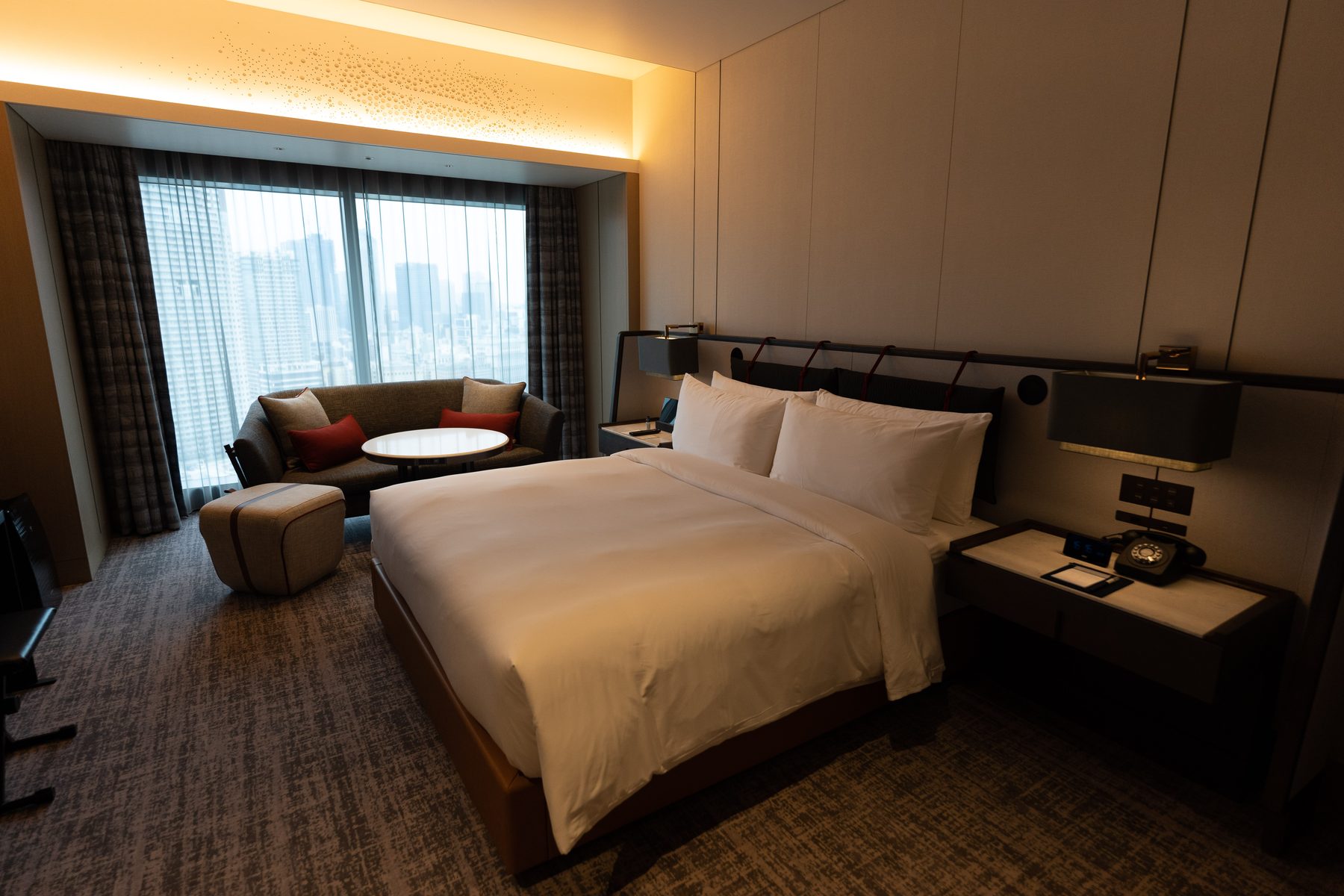
In Tokyo, Kyoto, and Osaka, land is expensive and rooms are sized accordingly. Even at very good hotels, a standard room is often one large bed or two singles, with space for a third person at most. The legal floor is modest too: Japan's hotel law asks for a minimum of 7 m² (about 75 sq ft) per guest room, or 9 m² (about 97 sq ft) if it has beds.
Rooms are sold by the number of guests, so when you type in five, only a few room types are left: the ones in the next section. They sell out first, especially in cherry blossom and autumn leaf season and during Japan's own holiday weeks (Golden Week in early May, Obon in mid-August and the New Year). Our guide to the best time to visit Japan shows when these fall.
Search for your real numbers from the start, children included. Booking for four and adding a fifth later is an easy way to end up with a room that does not fit.
What to look for
Which hotel rooms sleep five people?
At a glance
Four kinds of room take five in one: a Japanese-style room with futons, a family room with bunk beds, some suites, and an apartment hotel. Otherwise, book two rooms side by side.
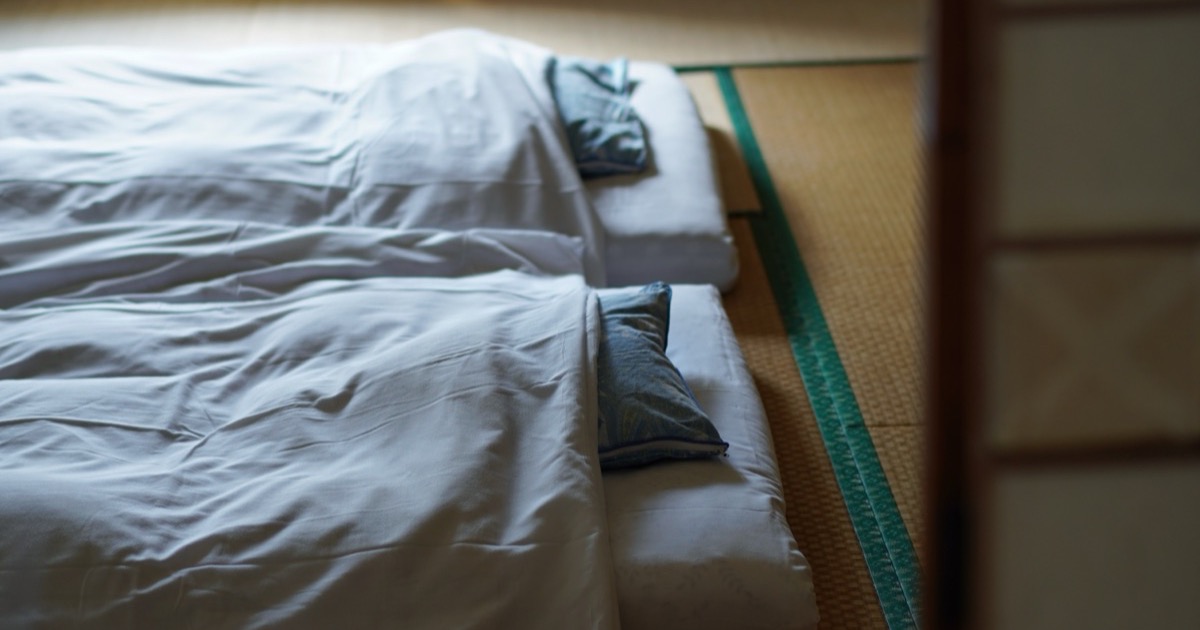
Japanese-style rooms (washitsu) have tatami floors and futons that are laid out in the evening, one for each guest. Because there are no fixed beds, they are often the easiest way for five people to share one room. You find them at ryokan, and some Western-style hotels have a few as well.
Family rooms add bunk beds or extra beds to a larger room, and are most common around theme parks. Near Tokyo Disney Resort, for example, Hilton Tokyo Bay's Family Happy Magic Room is 35 to 40 m² (about 375 to 430 sq ft), for 5 to 6 guests, with a bunk bed whose top bunk is for ages 10 and up.
Suites at large hotels sometimes take five, with a sofa bed or an extra bed in the living room; check the maximum number of guests on the room itself. Apartment hotels give you separate bedrooms, a kitchen, and a table to eat at, which matters more the longer you stay.
Rooms that take five
Japanese-style room
Futons on tatami, one per guest. Ryokan; a few city hotels.
Check: Shared or private bath; dinner times
Family room
Beds plus bunk or extra beds. Hotels near theme parks.
Check: Age limit for the top bunk
Suite
Beds plus a sofa bed or extra bed. Large city hotels.
Check: Maximum guests for that suite
Apartment hotel
Several beds, often two bedrooms. Tokyo, Kyoto, Osaka.
Check: Check-in time; where to leave bags
Two rooms
Split by age or bedtime. Almost any hotel.
Check: Rooms side by side, confirmed in writing
| Room type | How five sleep | Where you find it | Check before booking |
|---|---|---|---|
| Japanese-style room | Futons on tatami, one per guest | Ryokan; a few city hotels | Shared or private bath; dinner times |
| Family room | Beds plus bunk or extra beds | Hotels near theme parks | Age limit for the top bunk |
| Suite | Beds plus a sofa bed or extra bed | Large city hotels | Maximum guests for that suite |
| Apartment hotel | Several beds, often two bedrooms | Tokyo, Kyoto, Osaka | Check-in time; where to leave bags |
| Two rooms | Split by age or bedtime | Almost any hotel | Rooms side by side, confirmed in writing |
The other answer
Two rooms or one big room?
At a glance
For many families, two rooms side by side work better than one: two bathrooms, earlier bedtimes in one room, and a far wider choice of hotels. Connecting rooms exist but are few, so ask for them and get them confirmed in writing.
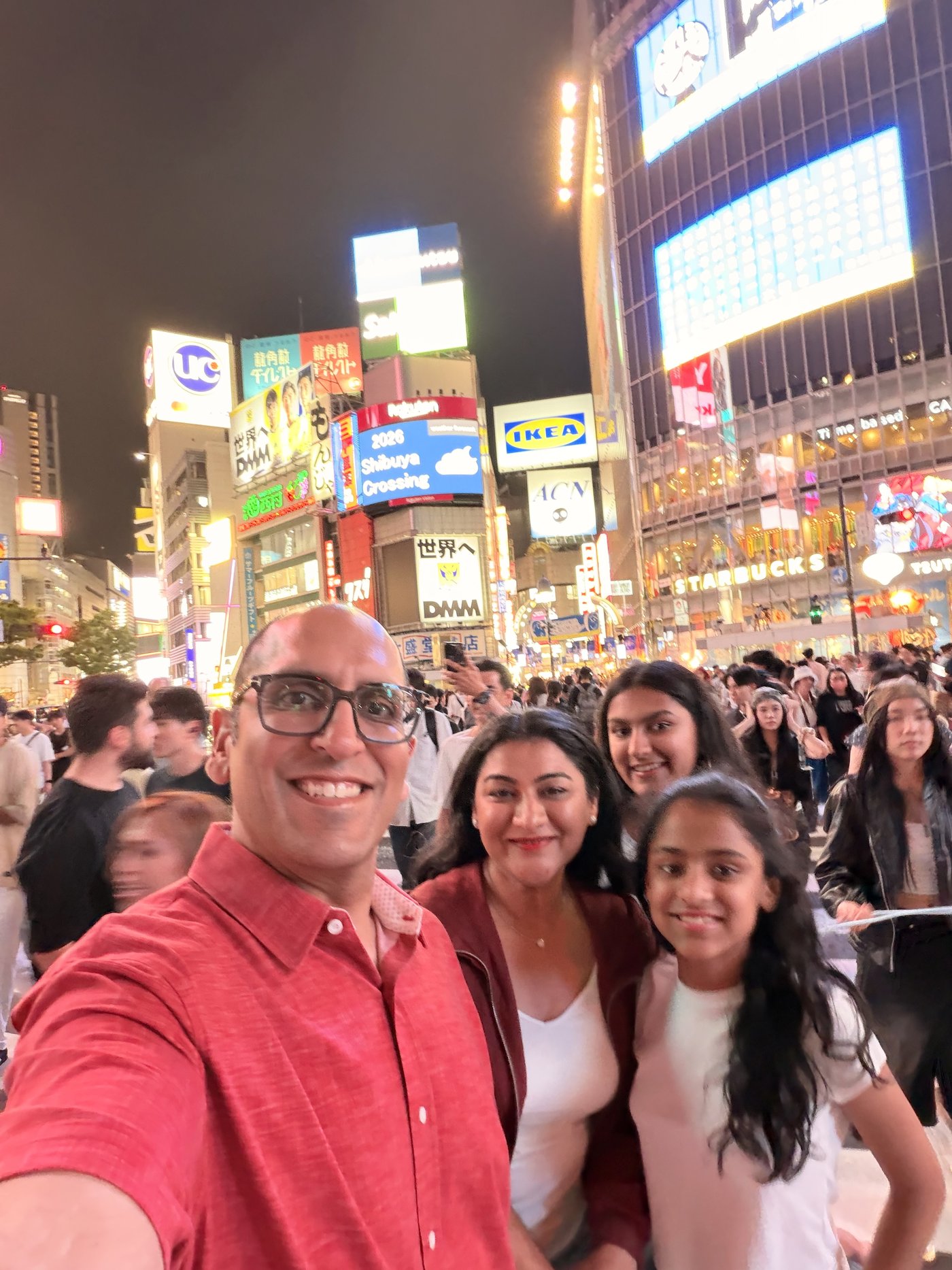
One room for five sounds simpler, but it means one bathroom for five people every morning. Two standard rooms at the same hotel are often easier to find than one large room, and they open up the whole hotel rather than its few family rooms. Parents with older children often take one room each; parents with young children split by bedtime.
If the rooms need to be next to each other, say so when you book. Connecting rooms, with a door between them, are limited, and most hotels treat them as a request rather than a promise until they confirm. A written confirmation before you arrive is worth asking for.
Before you compare prices, check how each hotel counts children. The age at which a child becomes a full guest is different at each hotel. At Hilton Tokyo Bay, for example, children aged 6 and over pay the adult rate and are counted in the number of guests. A family of five with teenagers is, for booking purposes, often five adults.
With two rooms, tell the hotel which one is the parents' room. Anything left for you goes to one room only: for the July family, the welcome box and the envelope with their bullet train tickets were placed in the children's room, and the parents wrote to ask us where the tickets were.
More space
Apartments and rental homes: when do they work?
At a glance
Apartment hotels and whole rental homes give a family of five the most space. The trade-off with a rental home is no front desk: check-in times, luggage, and help in English need more planning.
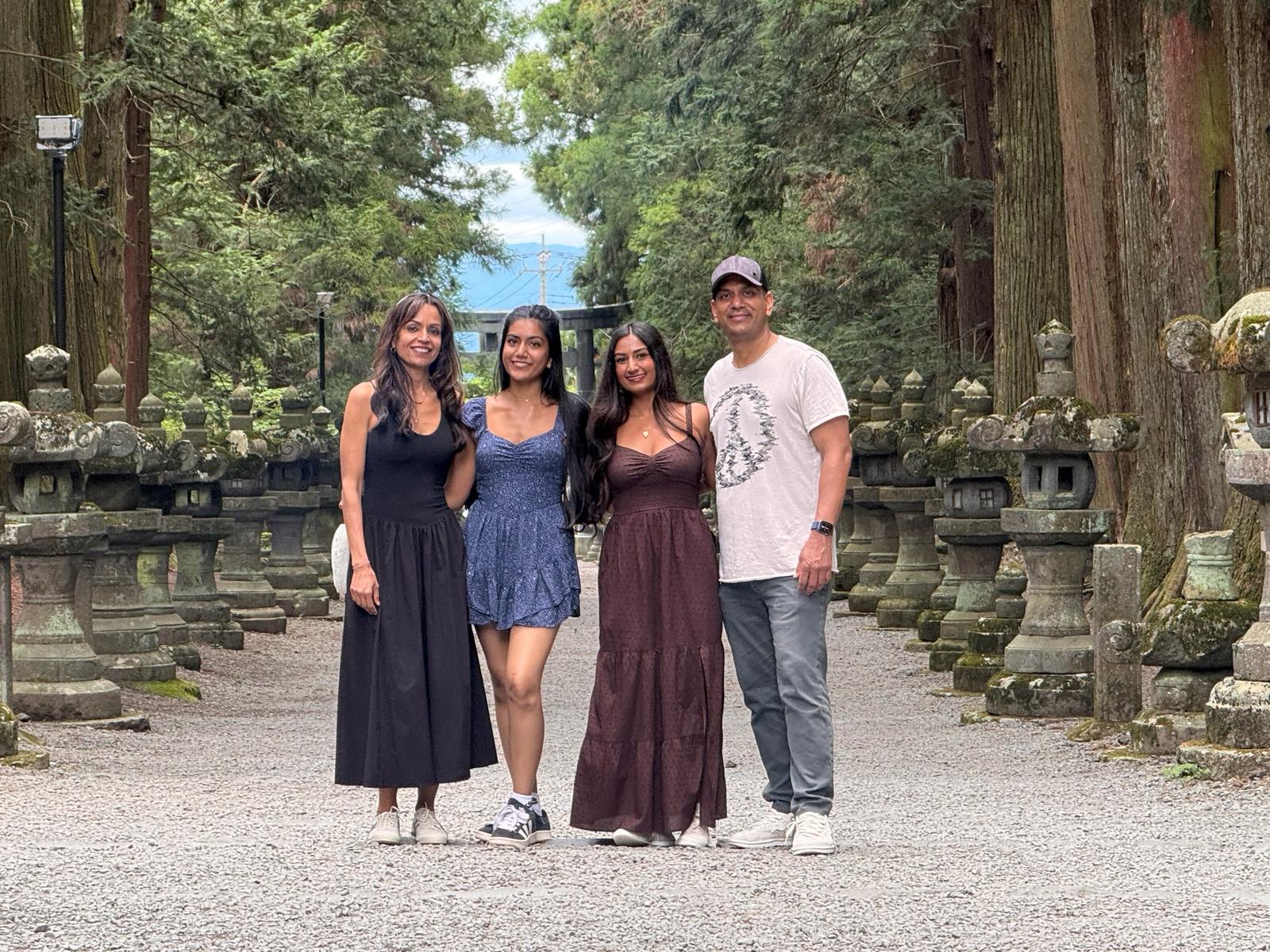
Apartment hotels sit between a hotel and a rental. MIMARU, for example, offers rooms for 4 to 10 guests, each with a kitchen and a dining table, at 29 locations in Tokyo, Kyoto and Osaka.
Whole rental homes go further: a house or a townhouse to yourselves, often in a quiet neighborhood, and lovely in Kyoto in particular. What they lack is a front desk. Check-in is often mid-afternoon, early entry is rarely possible, and the house instructions may only be in Japanese. While we were planning their arrival day in Kyoto, one father checked with their rental and wrote to us:
“Check in time at Airbnb is 4 pm”
The family had already decided not to carry their luggage to Kyoto. Their four large suitcases were sent ahead from Tokyo the morning they left, and they rode the bullet train with backpacks and one small suitcase. A guide met them in Kyoto that afternoon and helped them bring their things to the house. With a rental home, the moving days are the ones to plan: where the luggage goes, who meets you, and what you do until you can get in.
Japanese inns
Can five people share a ryokan room?
At a glance
Often, yes. A ryokan is one of the easiest places for five to sleep in one room, because futons are laid out for the number of guests. The rooms that take five are the first to go, so book early.
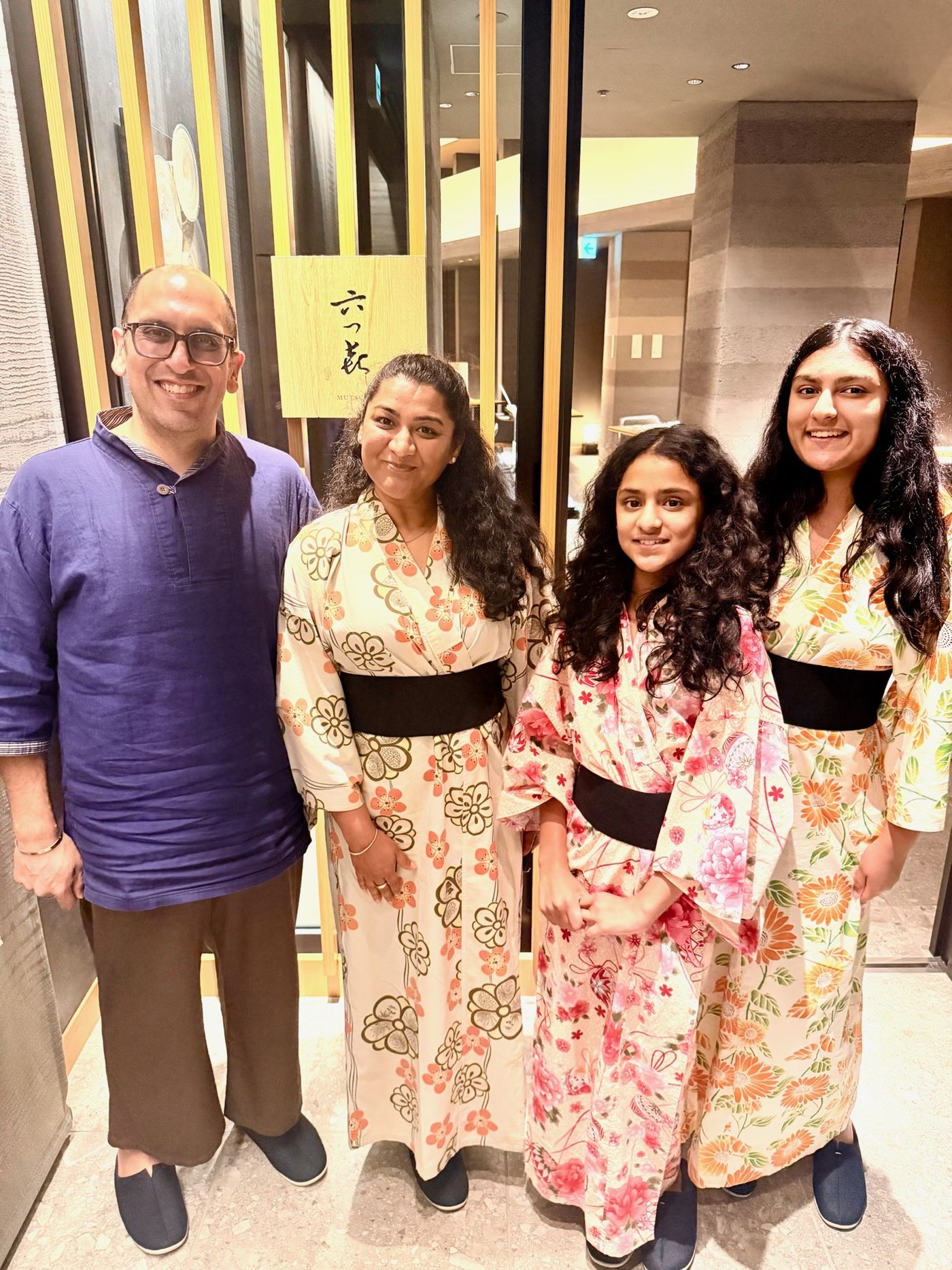
In a ryokan, the room is the living room by day and the bedroom by night: the staff lay out the futons while you are at dinner or in the bath. That makes a large Japanese-style room a natural fit for a family. Dinner and breakfast are usually part of the stay, which is one fewer meal to plan with tired children.
One night is often enough. The June family below spent a single night at a ryokan in Hakone, between Tokyo and Kyoto, and stayed in hotels for the rest of the trip. Our guide to Mt. Fuji and Hakone covers the area.
Tell the ryokan about allergies and food the children will not eat when you book, not at check-in. The kitchen plans the courses ahead.
Where to look
Tokyo, Kyoto, or Osaka: where to stay with five?
At a glance
Tokyo: apartment hotels, family rooms near Tokyo Disney Resort, or two rooms at a large hotel. Kyoto: rental homes and Japanese-style rooms. Osaka: apartment hotels and rental homes around Namba, or two rooms.
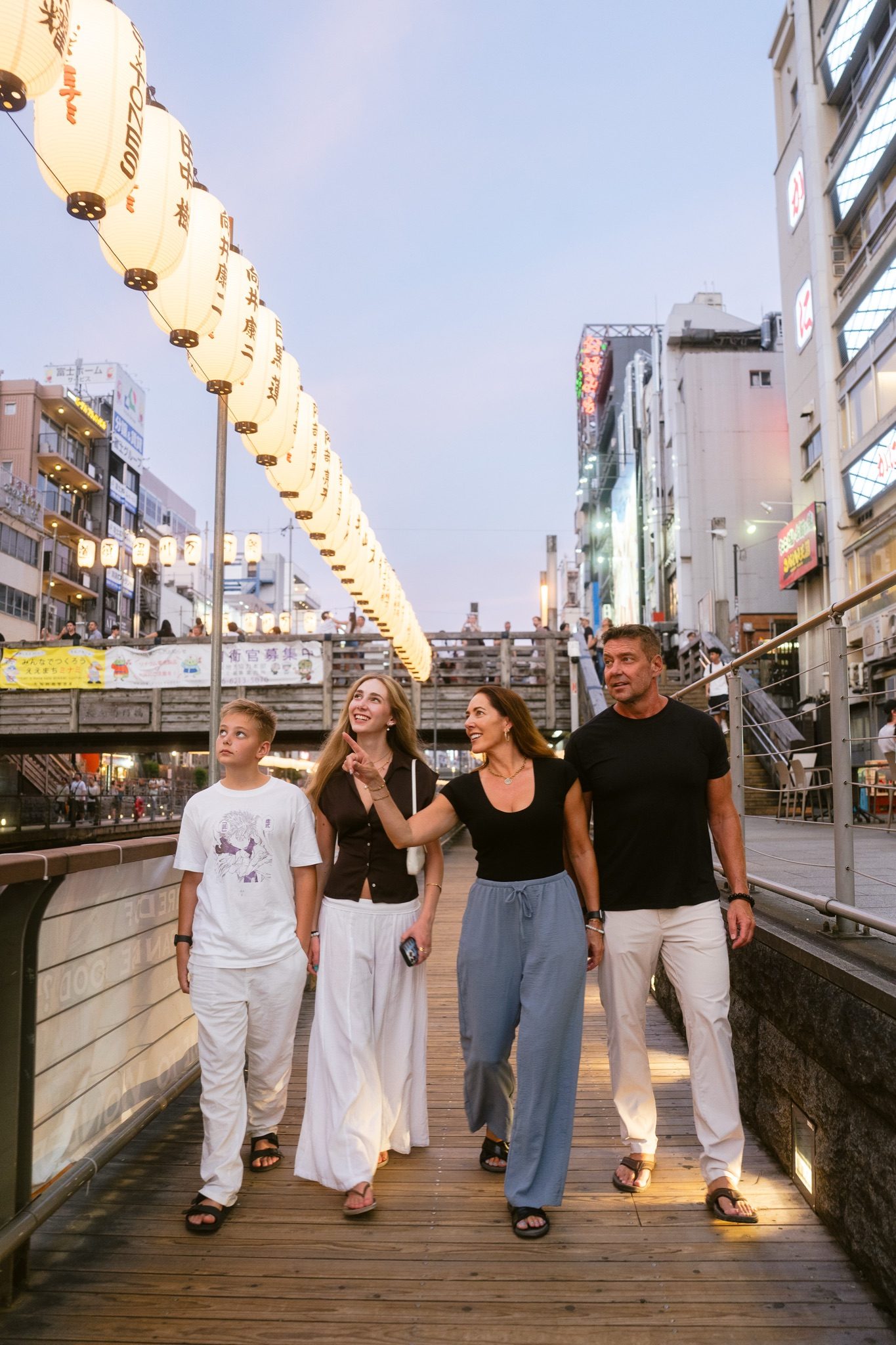
Tokyo has the most choice and the smallest rooms. For a family of five, the practical options are an apartment hotel, a family room at one of the hotels around Tokyo Disney Resort if the parks are part of the plan, or two rooms side by side at a large hotel. Our Tokyo guide helps with which area to stay in.
Kyoto is where rental homes shine: a townhouse within walking distance of Gion or the old streets, with space to spread out after long days of temples. Hotels with rooms for five are fewer and book up early in spring and autumn. See our Kyoto guide.
In Osaka, apartment hotels and rental homes are easy to find around Namba, close to Dotonbori and the trains. Our Osaka guide covers the neighborhoods.
Real trips
How three families slept, and what it means for five
At a glance
Even at four, all three families booked more than one hotel room somewhere, and two of them also stayed in whole rental homes. With five, plan for two rooms in the city hotels and a place with space, a rental home or a ryokan, for part of the trip.
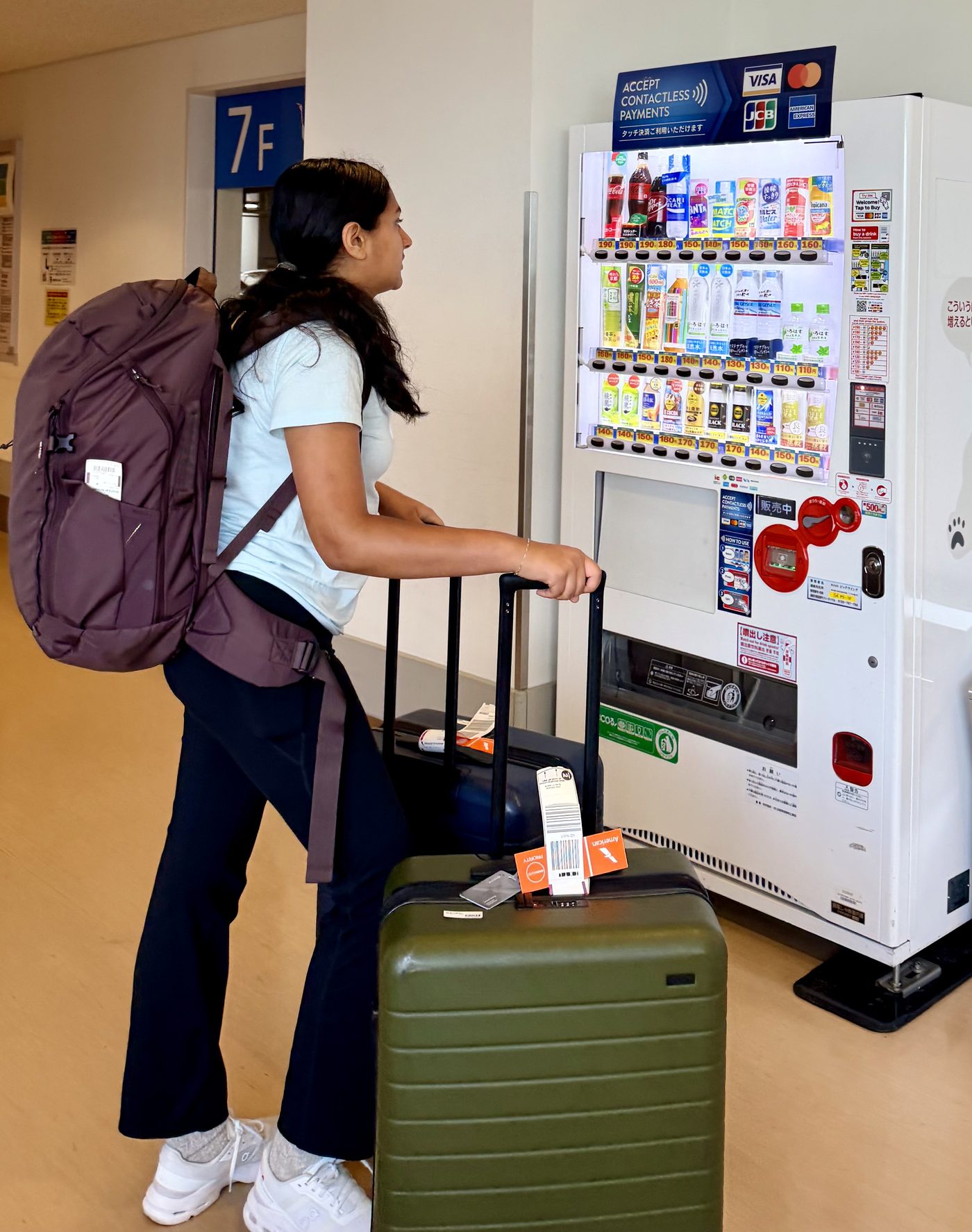
Late July: a room for the children. A family of four with two children stayed in two rooms at a Tokyo hotel, one for the parents and one for the children, then moved to rental homes in Kyoto and Osaka. Their suitcases went from Tokyo to Kyoto by a next-day delivery service, and when they moved from Kyoto to Osaka, the luggage went straight into the private car at pickup. Read their eleven days.
June: two rooms and a ryokan. A family of four booked hotel rooms in Ginza for the start of their trip, spent one night at a ryokan in Hakone, and finished in Kyoto and Osaka. Between stays, we suggested sending the heavy suitcases ahead, with the note that they arrive the next day. Read their ten days.
Late May: rental homes, then two rooms. A family from Las Vegas stayed in rental homes in Tokyo and Kyoto. When a typhoon cancelled their move to Osaka, they stayed on in Kyoto, and the father booked two hotel rooms for the last nights:
“I booked two rooms from June 2-4”
They spent the last two nights in a Kyoto hotel instead of moving on. Read their seven days.
Which rooms, in which city, and how the bags get from one to the next: with five, this is where the planning goes. Start a conversation →
The difference
Rooms for five, and the days in between
For a family of five, the hotels are only half of it. The other half is the days in between: when you can check in, where the bags are, and who meets you at the station.
Some families hand us the whole trip; others only the nights that need two rooms, or a car for the bags on moving day. Our guide to planning it yourself or with help compares the two.
Plan your family's stays →Questions, answered
Can 5 people stay in one hotel room in Japan?+
Sometimes, but not in a standard room. Most city hotel rooms in Japan are built for two or three. Five fit in one room in a Japanese-style room with futons, in a family room with bunk beds, in some suites, or in an apartment hotel. Otherwise, book two rooms.
How do you stay in a hotel with 5 people in Japan?+
Either find one of the room types made for a group (a Japanese-style room, a family room, a large suite or an apartment), or book two rooms next to each other. Enter every child's age when you search, because many hotels count older children as adults.
Where can a family of 5 stay in Tokyo?+
Look at apartment hotels, the family rooms at the hotels around Tokyo Disney Resort, and suites at large hotels. MIMARU, for example, has rooms for 4 to 10 guests, each with a kitchen and a dining table, at 29 locations in Tokyo, Kyoto and Osaka. Near Tokyo Disney Resort, Hilton Tokyo Bay's Family Happy Magic Room is 35 to 40 m² (about 375 to 430 sq ft), for 5 to 6 guests, with a bunk bed whose top bunk is for ages 10 and up.
Do kids count as guests in Japanese hotels?+
Usually yes, from a certain age, and the age is different at each hotel. At Hilton Tokyo Bay, for example, children aged 6 and over pay the adult rate and are counted in the number of guests. Always enter every child and their age when you search.
Can you book connecting rooms in Japan?+
At some hotels, yes, but they are few and are usually a request rather than a guarantee. Ask the hotel directly, and if the rooms must be together, get it confirmed in writing before you arrive.
Is an apartment hotel a good choice for a family in Japan?+
Often, yes. You get more space, a kitchen, and a table to eat at, and everyone in one place. Whole rental homes go further but have no front desk at all, so check-in times, luggage, and help in English take more planning.
Can a family of five stay in a ryokan?+
Yes, and a ryokan is often the easiest place for five to share one room, because futons are laid out for the number of guests in a Japanese-style room. Book early: rooms that take five are the first to go.
What is a good Tokyo Disney hotel for a family of 5?+
Look for the family rooms. Hilton Tokyo Bay, an official hotel of Tokyo Disney Resort, has a Family Happy Magic Room that is 35 to 40 m² (about 375 to 430 sq ft), for 5 to 6 guests, with a bunk bed whose top bunk is for ages 10 and up.
Continue exploring
Japan changes its prices and its rules more often than most countries, and a good deal of what is written about it online is quietly out of date. The fares, fees, taxes and access rules on this page were checked against the official sources below in November 2026. Where something was likely to move, we have said so in the text. If you are traveling on dates far from that, check the official page — or ask us — rather than trusting any guide, including this one.
Checked against
- Ministry of Health, Labour and Welfare — Hotel Business Act enforcement order (Article 1)
- MIMARU apartment hotels — official site
- Hilton Tokyo Bay — Family Happy Magic Room (official site, Japanese)